Quick Answer: A Sacramento garbage disposal needs a switched 120-volt supply under the sink, correct cord or hardwire termination, and GFCI protection on kitchen receptacles under current California Electrical Code rules based on the 2023 NEC. Many installs share a 20-amp circuit with a dishwasher when the load math works. A brand-new under-sink circuit usually needs a City or County electrical permit. Plumbing alone does not finish the job.
Homeowners searching garbage disposal electrical tips usually already have a plumber booked or a box in the garage. The missing piece is the switch, the under-sink receptacle or junction box, and whether the kitchen circuit can carry the motor without tripping. Thin national posts copy plumbing checklists and wave at “hire an electrician.” This rewrite stays on the electrical side for Sacramento kitchens.
Old Town Electric Inc. is a C-10 shop (CSLB #1099728). We wire disposal switches, under-sink receptacles, and new kitchen circuits across Sacramento, Elk Grove, Roseville, Citrus Heights, Folsom, and nearby cities. For outlet and switch work, start with our electrical outlets and switches service page. Call (916) 307-0990 when the cabinet is open and you want the circuit done once.
What electrical work does a garbage disposal need?
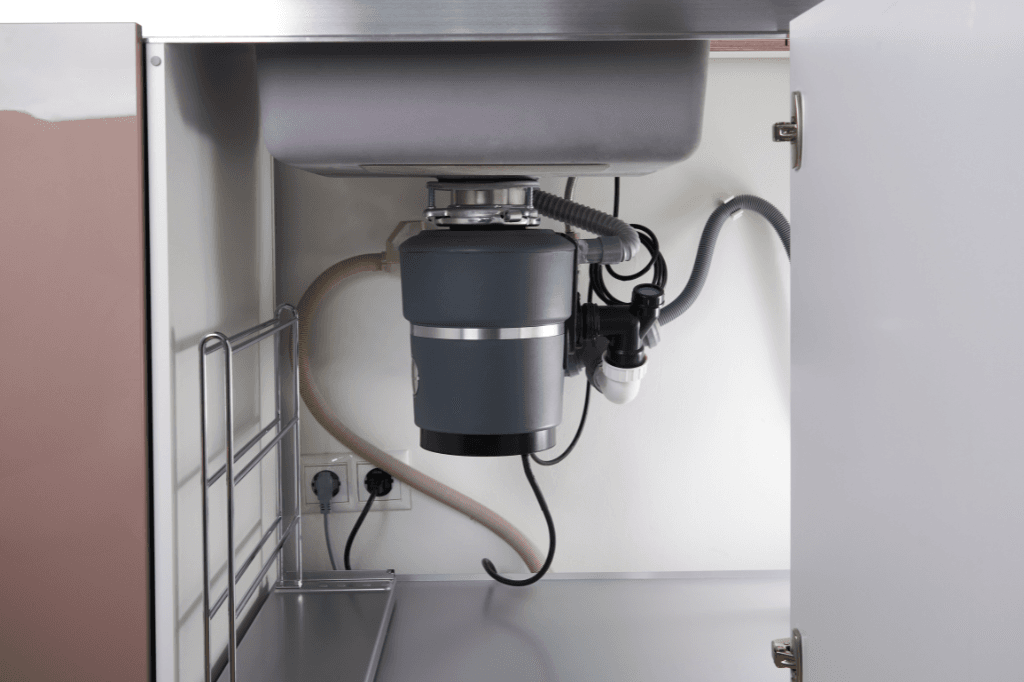
A disposal is a short-duty 120-volt motor hanging in a wet cabinet. Electrically you need three pieces that work together:
- A supply method under the sink (cord-and-plug into a receptacle, or hardwired into a junction box).
- A control method within reach of the sink (wall switch, or a listed air switch at the counter).
- Overcurrent and shock protection that match the wire and the kitchen location rules.
Most modern plug-in units ship with a short cord. NEC 422.16(B) framing used in trade references allows cord-and-plug connection when the cord length and accessibility rules are met and the receptacle stays reachable in the cabinet. Hardwired units skip the cord and land on wirenuts in a box. Either way, the switch or air switch is what keeps your hand off a live motor while you clear a jam.
Do not borrow a random countertop small-appliance receptacle on a kitchen island and drop an extension cord into the cabinet. That bypasses the disposal switch, crowds the small-appliance branch circuits reserved for countertop use, and fails inspection in most Sacramento remodels.
Horsepower and start current matter more than brochure gloss. A compact 1/3 HP unit on a healthy 20-amp shared dishwasher circuit is a different load story than a 1 HP deluxe model on a tired 15-amp multiwire leftover. If you already bought the disposer, send the nameplate amps with your estimate request so the circuit plan matches the motor you actually own.
Island sinks add another wrinkle. The switch may need to land on the island cabinet face, or you may prefer a countertop air switch because a wall is not adjacent. Either choice still needs a legal branch circuit under the island. Fishing a cord across the kitchen floor to a wall receptacle is not an install.
Does a disposal need a dedicated circuit or can it share with a dishwasher?
The NEC does not hand every disposal its own breaker by name. In practice Sacramento kitchens use one of three patterns:
| Circuit pattern | When it works | Common failure mode |
|---|---|---|
| Dedicated 15A or 20A disposal circuit | New kitchen, heavy disposer, or long feeder run | Higher material cost; cleanest inspection story |
| Shared 20A with dishwasher | Combined load stays within the branch rating | Nuisance trips when both heat and grind at once |
| Tapped onto a lighting or receptacle mashup | Almost never acceptable on a remodel | Trips, shock risk, failed inspection |
Kitchen small-appliance branch circuits that serve countertop receptacles are not a free spare for fixed appliances. A disposal and dishwasher pair on a properly sized 20-amp circuit is a common, code-discussed arrangement when the nameplate loads fit. A 15-amp shared circuit that already browns out when the dishwasher heats is a bad place to hang a new 3/4 or 1 HP disposer.
Read the nameplates before you buy the unit. If your panel is full or the only spare is a shared lighting leg from a 1960s Land Park or Carmichael kitchen, budget a new circuit and a panel space check, not just a cord kit.
Do Sacramento kitchens need GFCI on the disposal circuit?
Yes for new and altered kitchen receptacle work under the current California Electrical Code path that adopts the 2023 NEC kitchen GFCI expansion. EC&M’s kitchen NEC coverage explains that Sec. 210.8(A)(6) now requires GFCI protection for dwelling-unit kitchen receptacles in the 125V through 250V range up to the amp limits in that section. The old “only countertop receptacles within 6 feet of the sink” idea is gone for that kitchen receptacle rule.
Mike Holt’s 2023 NEC GFCI summary makes the same practical point for homeowners: cord-and-plug kitchen appliances such as a disposal receptacle are in scope. Protection can be a GFCI receptacle under the sink (if it stays readily accessible per the rule) or a GFCI / dual-function breaker at the panel. Hardwired disposals still need the branch or outlet protection method your AHJ expects when the circuit is new or extended.
Older homes without GFCI on an existing disposal receptacle are not automatically illegal to leave untouched until you alter the circuit. The moment you add a new under-sink receptacle, relocate the box, or pull a new cable, plan on bringing protection up to the adopted code the inspector is using.
AFCI rules for kitchen branch circuits often travel with the GFCI conversation on remodel work. Depending on how the circuit is built and what your AHJ enforces on the adopted CEC cycle, a dual-function breaker can cover both arc-fault and ground-fault protection in one device. Ask the electrician which protection method they are using so you are not surprised at inspection.
Existing GFCI receptacles that nuisance-trip when the disposal starts sometimes point to a wet motor, a nicked cord, or a shared circuit with a leaky dishwasher heating element. Replacing the GFCI device alone without checking the load is a common repeat call.
If breakers trip only when the disposal runs wet, treat that as a diagnostic call, not a bigger breaker. Our electrical troubleshooting and repair lane covers intermittent trips and dead under-sink receptacles. For device-level GFCI swaps elsewhere in the house, see the GFCI outlet installation guide.
Switch, plug-in, or hardwired – which setup fits your sink cabinet?
Wall switch above the counter is still the most common Sacramento layout. The switch leg feeds the under-sink receptacle or hardwire box. Keep the switch within easy reach while standing at the bowl so you can kill the motor without diving into the cabinet.
Air switches pierce the countertop or sink hole with a pneumatic button and a bellows that trips an under-sink module. They help on islands where a wall switch is awkward, or when a remodel wants a cleaner backsplash. Use listed disposal air-switch kits. Random low-voltage buttons that were never listed for the motor load are a callback waiting to happen.
Plug-in vs hardwire choice:
- Plug-in: easier motor swap later; receptacle must stay accessible; cord length and strain relief matter.
- Hardwire: cleaner cable management; needs a proper junction box and cover; motor swap means opening splices.
Never leave bare splices floating behind the dishwasher. Never pinch the cord under the disposal mounting ring or against a sharp cabinet edge without a bushing. Those are the dull mistakes that turn a new disposer into a shock and fire problem six months later.
Coordinate trades before the cabinet floor is crowded. Electricians need room to set a box, clamp a cable, and test the switch with the disposer mounted. If the plumber finishes and the cabinet is already packed with a water filter, RO tank, and dishwasher junction, the electrical fix costs more because access disappeared.
On a full kitchen remodel, rough-in the disposal switch and under-sink receptacle before finish surfaces close. Retrofitting a switch into a finished backsplash tile job is slower and messier than placing the box when the walls are open.
When does a new under-sink circuit need a City or County permit?
Jurisdiction first. Inside the City of Sacramento, Community Development’s Minor Permits page lists residential electrical minor work that includes new electrical circuits, rewire work, and panel items. A brand-new cable from the panel to the kitchen for a disposal is not “just a cord.” Expect a minor electrical permit and field inspection on that path. Like-for-like replacement of a disposal on an already-correct receptacle may be a different conversation than pulling new wire.
Unincorporated addresses use Sacramento County Building Permits and Inspection through the County development building-permits path. Elk Grove, Roseville, Citrus Heights, Folsom, and other suburbs run their own counters. An estimate that ignores the AHJ is incomplete.
Ask the electrician who pulls the permit and whose license is on it. CSLB consumer materials tell homeowners to confirm the contractor obtains required building department permits. Pairing a plumber who “does not touch electrical” with an unlicensed handyman for the switch is how kitchens fail final inspection.
If you rent, get written landlord approval before anyone opens the panel or cuts a new switch opening. Tenant “just replace the disposal” requests still become electrical alterations when the receptacle or switch was never there. Owner-builder paths also differ from hiring a C-10; CSLB and local AHJ rules still apply either way.
When the panel is out of spaces or the feeder is undersized for a kitchen refresh, the conversation expands into circuit replacement and sometimes panel work. Live service detail for new runs sits on our circuit replacement and installation page.
What electrical mistakes show up after a plumbing-only install?
Plumbing can set the flange and the drain perfectly and still leave you with a bad electrical day. Field patterns we see:
- Disposal and dishwasher stacked on a tired 15-amp circuit that trips during dinner cleanup.
- No GFCI protection on a new under-sink receptacle after a kitchen refresh.
- Switch that still controls a light, or a light that now also runs the disposal because someone reused the wrong traveler.
- Open-backstabbed receptacle that arcs when the motor starts.
- Missing strain relief on a cord kit, or a hardwire splice with no box.
- Shared neutral / multiwire surprises in mid-century Sacramento kitchens when a “spare” hot was borrowed.
If the unit hums and will not spin, press the reset on the disposer and confirm the wall switch before you assume a dead motor. If the breaker or GFCI trips on every start, stop resetting and call a licensed electrician. Water plus a faulted motor winding is not a DIY panel experiment.
Bottom Line
Treat disposal install as an electrical project that happens to live under a sink. Confirm switch control, cord or hardwire termination, circuit capacity, GFCI protection for kitchen receptacle work, and the correct City or County permit when you pull a new circuit. Skip plumbing-only shortcuts that leave the motor on a borrowed lighting leg.
Need the switch, receptacle, or new under-sink circuit done in Sacramento? Call Old Town Electric Inc. at (916) 307-0990 or request help through contact. CSLB #1099728. Outlet and switch scopes start on electrical outlets and switches.
Sources
EC&M – What’s Cooking in the Kitchen for the 2023 NEC (Sec. 210.8(A)(6) kitchen receptacle GFCI expansion beyond countertop-only framing).
Mike Holt – GFCI and AFCI based on the 2023 NEC (kitchen receptacles including disposal receptacle examples; readily accessible GFCI device notes).
National Electrical Code 210.8(A)(6) kitchen GFCI rules and 422.16(B) appliance cord-and-plug connection framing as adopted in the California Electrical Code.
City of Sacramento Community Development – Minor Permits page (residential electrical minor work including new electrical circuits and rewire work).
Sacramento County Building Permits and Inspection / County development building permits path for unincorporated addresses.
Contractors State License Board (CSLB) – C-10 Electrical Contractor license verification for California (#1099728 for Old Town Electric Inc.); consumer permit guidance when hiring a contractor.