Whole house rewiring in Sacramento runs about $10,000 to $30,000, or roughly $5 to $17 per square foot, according to HomeGuide’s 2026 cost data. Homes with attic or crawlspace access land at the low end. Knob and tube replacement runs $12,000 to $35,000. Most older Sacramento homes need a panel upgrade at the same time, and the City of Sacramento has a dedicated re-wire permit category for exactly this work.
Table of Contents
Whole house rewiring in Sacramento is the job homeowners put off the longest, usually because nobody has ever given them a straight number. We have been pulling wire in Sacramento-area homes for more than 10 years, from 1920s bungalows near Old Town to 1970s ranch houses in Carmichael and Orangevale, and the honest answer is that the price swings hard depending on what is behind your walls and how we can get to it.
This guide covers what a rewire actually costs here, which homes truly need one, which ones only need part of the system replaced, how permits work in the city versus the county, and what the 2025 California Electrical Code changed as of January 2026. No guesswork, no padded numbers.
How Much Does Whole House Rewiring Cost in Sacramento?
Nationally, HomeGuide puts a full rewire at $10,000 to $30,000, or $5 to $17 per square foot. Angi’s 2026 data lists a narrower $2 to $4 per square foot, which generally reflects easier jobs with open access and no repairs. California labor rates sit above the national average, so Sacramento homeowners should plan toward the middle and upper part of the HomeGuide range rather than the bottom of Angi’s.
Cost by Home Size
| Home size | Typical rewire cost range |
|---|---|
| 800 sq ft | $4,000 – $13,600 |
| 1,000 sq ft | $5,000 – $17,000 |
| 1,200 sq ft | $6,000 – $20,400 |
| 1,500 sq ft | $7,500 – $25,500 |
| 2,000 sq ft | $10,000 – $34,000 |
| 2,500 sq ft | $12,500 – $42,500 |
Source: HomeGuide, 2026. A lot of Sacramento’s postwar tract housing falls in the 1,000 to 1,600 square foot band, which is why so many local rewire quotes land between $8,000 and $25,000.
Why Access Changes Everything
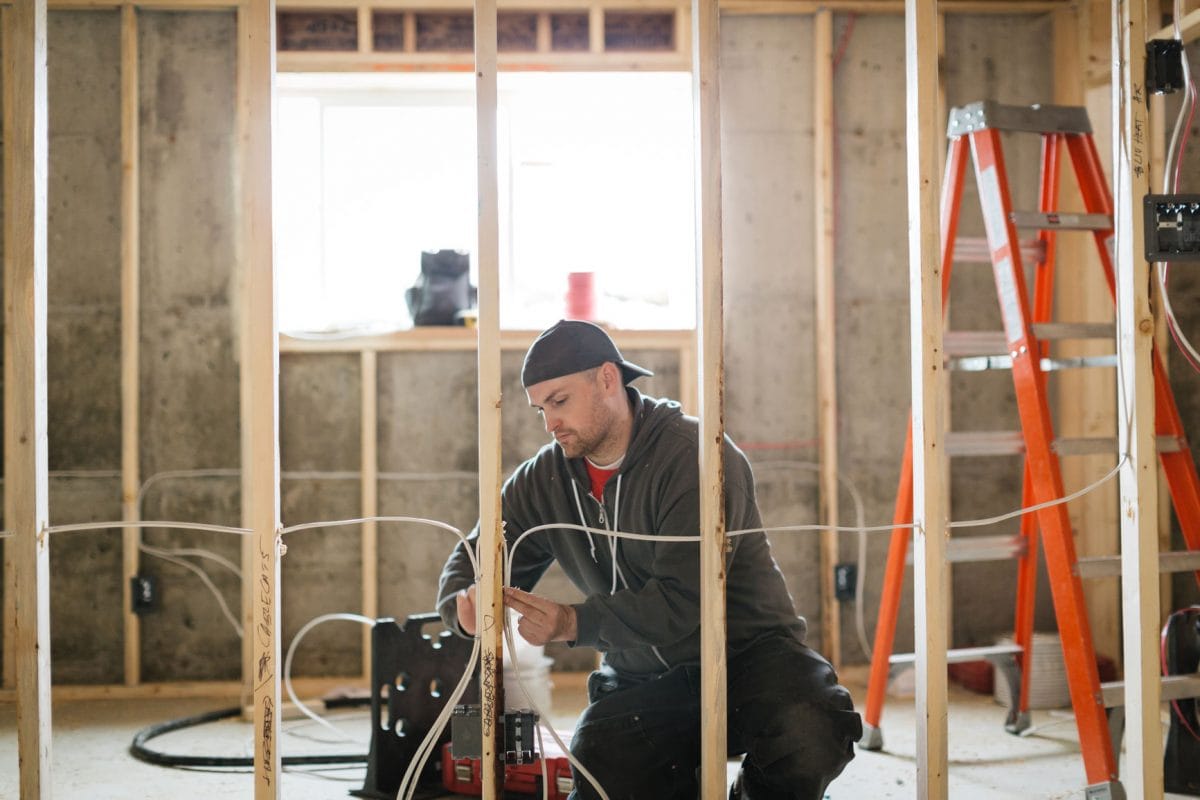
The single biggest lever on your final number is whether we can reach the wiring without opening walls. HomeGuide breaks it out this way:
| Approach | Materials | Labor | Total |
|---|---|---|---|
| Fish through attic, crawlspace, or floor joists | $4,000 – $8,000 | $6,000 – $12,000 | $10,000 – $20,000 |
| Open walls, rewire, replace drywall | $8,000 – $12,000 | $12,000 – $18,000 | $20,000 – $30,000+ |
Opening walls adds 25% to 30% to the total. Good news for most of the area: Sacramento’s slab-on-grade ranch homes from the 1950s through the 1970s usually have a walkable or crawlable attic, and that is the cheaper path. Older two-story homes and homes with plaster and lath are the ones that push toward the high end, since plastering runs $2 to $10 per square foot to repair versus $2 to $6 for drywall.
The Line Items People Forget
- Electrical permits for rewiring run $250 to $900 nationally, and a separate inspection typically adds $100 to $200
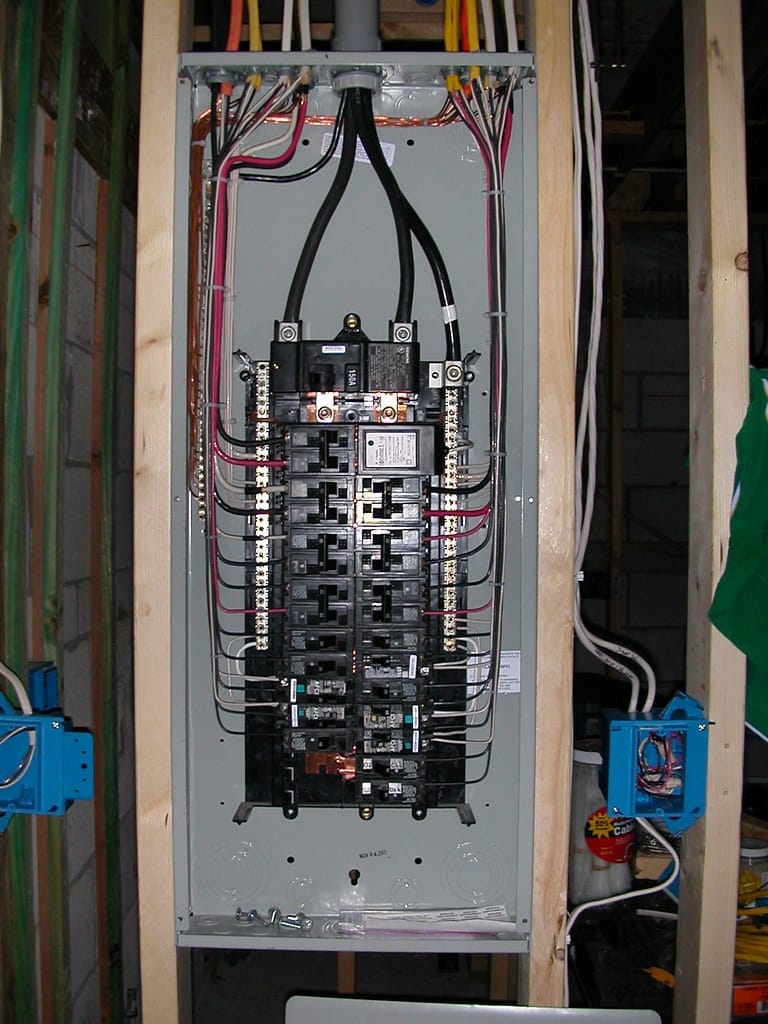
- A panel replacement costs $850 to $2,500, and most homes old enough to need rewiring also need this
- Replacing every outlet in the house runs $1,200 to $2,600 for labor and materials
- Drywall patching runs $300 to $1,500 per patch, and a rewire creates a lot of small openings
- Labor is billed at $50 to $130 per hour, or $100 to $300 or more per opening on flat-rate jobs
- Asbestos or lead paint found mid-project triggers abatement costs that no honest electrician can quote in advance
That last one matters in Sacramento. If your home predates 1978, there is a real chance of lead paint, and pre-1980 popcorn ceilings and duct wrap can contain asbestos. We flag it and stop rather than cut through it.
Which Sacramento Homes Actually Need a Whole House Rewire?
Not every old house needs one. We turn down more full rewires than we sell, because plenty of homes only need targeted work. Here is how we sort it.
By Wiring Era
| Built | What you likely have | Typical recommendation |
|---|---|---|
| Before 1950 | Knob and tube, no ground | Full rewire, $12,000 – $35,000 |
| 1950 – 1965 | Early cloth-jacketed NM cable, often ungrounded | Full or staged rewire depending on jacket condition |
| 1965 – 1973 | Possible solid aluminum branch circuits | Rewire or approved connector repair |
| 1974 – 1990 | Grounded copper NM cable | Usually panel and circuit additions, not a rewire |
| After 1990 | Modern copper NM cable | Rewire almost never needed |
The aluminum window is worth taking seriously. Between roughly 1965 and 1973, solid aluminum was substituted for copper in about two million American homes because copper prices spiked. A national survey conducted for the U.S. Consumer Product Safety Commission found that pre-1972 homes wired with aluminum were 55 times more likely to have connections at outlets reach what CPSC calls Fire Hazard Conditions than comparable copper-wired homes. That window overlaps directly with a large share of the housing in Carmichael, Fair Oaks, Orangevale, Citrus Heights, and Rancho Cordova. If you want the detail, we wrote up the warning signs of aluminum wiring failure separately.
Signs Your Wiring Is the Problem
- Two-prong outlets through most of the house
- Breakers or fuses that trip when you run a microwave and a space heater on the same circuit
- Warm outlet or switch plates, or a faint scorch mark around a receptacle
- Cloth or rubber insulation that crumbles when an electrician pulls a device out of the box
- Lights that dim across the house when the AC compressor kicks on
- A fuse box, or a panel brand with a known failure history
When Partial Work Is the Smarter Call
If your wiring is grounded copper in decent shape and the real problem is capacity, rewiring the whole house is the wrong purchase. Adding dedicated circuits for the kitchen, laundry, garage, and a future EV charger costs a fraction of a full rewire and solves the actual complaint. Same story if the issue is a maxed-out 100-amp service: an electrical panel upgrade may be all you need. We would rather tell you that up front than sell you 2,000 feet of Romex you do not need.
There is also a middle path. HomeGuide notes that rewiring in stages costs more per square foot overall, but it lets you split a $20,000 project across a few years and stay in the house. If you are already remodeling or adding on, that is the cheapest possible moment to rewire the affected part of the house, because the walls are already open.
Do You Need a Permit to Rewire a House in Sacramento?
Yes, and this is where a lot of homeowners get tripped up, because the answer depends on which side of a line your parcel sits on.
Inside Sacramento City Limits
The City of Sacramento maintains a specific permit category called Residential Re-Wire (Whole House or Partial). It carries a building permit fee based on project valuation, plus a general plan fee, a green building fee, and a technology fee. There is also a city operations tax that only applies when a California licensed contractor is the permit holder. Fees are published on the city’s Fees By Project page and change with valuation, so the only accurate number is the one the counter gives you on your actual scope.
Unincorporated Sacramento County
Carmichael, Fair Oaks, Orangevale, Arden-Arcade, Gold River, and Rosemont are unincorporated. They do not go through the city. Those permits run through the Sacramento County Building Permits and Inspection Division, which uses the Accela online portal and accepts electronic plan submittal only, on projects large and small. Homeowners in Carmichael sometimes call us surprised that their address is not a City of Sacramento address for permit purposes. If you are in that area, our Carmichael electrician page covers what we handle locally.
Incorporated Suburbs Run Their Own Show
Citrus Heights, Roseville, Folsom, Elk Grove, Rancho Cordova, Rocklin, and Auburn each issue their own building permits with their own fee schedules and inspection queues. A rewire in Citrus Heights and a rewire in Auburn are the same electrical work and two different permit processes. We pull the permit either way. That is our job, not yours.
What If Previous Work Was Never Permitted?
This comes up constantly in homes built before 1980. A previous owner added a bedroom, ran a subpanel to a detached garage, or wired a converted sunroom, and none of it appears in county records. It usually surfaces at resale, when a buyer’s inspector opens a panel and finds circuits that do not match the permit history.
A rewire is the right time to clean that up. The unpermitted work gets brought to current code and included in the permitted scope, which means the inspection covers it and the paperwork exists when you sell. Homeowners who skip that step often end up negotiating against it later. Our post on electrical upgrades and resale value gets into that side of it.
What Does the 2025 California Electrical Code Require in a Rewire?
California adopted the 2025 California Electrical Code, Title 24 Part 3, with an effective date of January 1, 2026. It is based on the 2023 National Electrical Code with California amendments. If you got a rewire quote in 2024, the code it was written against is no longer the code your inspector uses.
For a whole house rewire, the practical effects look like this:
- Arc-fault protection is required across most living-area branch circuits, not just bedrooms
- Ground-fault protection is required in kitchens, bathrooms, laundry, garages, basements, outdoors, and near sinks
- Every branch circuit gets an equipment grounding conductor, which is the main reason ungrounded two-prong homes cannot simply be patched
- Receptacle spacing follows the NEC rule of an outlet within reach at least every 12 feet of wall line, so most older homes gain outlets during a rewire
- Tamper-resistant receptacles are required in dwelling unit locations
The AFCI and GFCI requirements are why a rewire almost always pulls a panel replacement along with it. Older panels frequently have no compatible AFCI or dual-function breakers available, and stuffing modern breakers into a 1968 bus is not a code-compliant answer. If you want to sanity-check your own service size first, our guide on how many amps your home really needs walks through the load math.
How Long Does a Whole House Rewire Take, and Can You Stay in the House?
HomeGuide puts a typical rewire at 3 to 10 or more days, and jobs that involve cutting into walls run longer because of the demolition, patching, and cleanup. On a 1,400 square foot Sacramento ranch with attic access, we usually plan on a week of wire pulling plus inspection scheduling. Two-story homes with plaster take longer.
You can stay in the house. It is slower and it costs more, because circuits have to be re-energized at the end of each day and cleanup happens daily instead of once. Most contractors, including us, will tell you that vacating for the week is cheaper and quieter. In a Sacramento July, when it is 100 degrees plus and the AC circuit is part of the work, that recommendation gets a lot easier to accept.
One planning note specific to summer here: heat drives the busiest stretch of our year, and it also stresses the exact circuits a rewire replaces. We see more heat-related electrical failures in July and August than any other months. If your rewire is elective, spring and fall are easier to schedule and more comfortable to live through.
What Should Sacramento Homeowners Look For in a Rewiring Electrician?
A rewire is one of the largest projects most homeowners will ever hire for, and there is no way to inspect the finished work yourself once the drywall goes back up. Screen carefully.
- An active C-10 electrical contractor license, verified yourself rather than taken on faith. Ours is #1099728, and you can look it up on the California Contractors State License Board site at cslb.ca.gov in under a minute
- Current liability insurance and workers compensation coverage, with a certificate you can actually see
- Real experience in homes from your era, since 1950s cloth-jacket wiring and 1968 aluminum are different problems with different solutions
- A written scope that names the circuit count, the panel work, the permit, and who patches the drywall
- They pull the permit under their own license instead of asking you to pull an owner-builder permit, which shifts liability onto you
- A firm bid rather than an open hourly estimate, with the unknowns spelled out instead of buried
- A local track record you can check. We are family owned, we have been at this in the Sacramento area for over 10 years, we hold a 4.9 out of 5 across 226 plus reviews, and we are BBB A-rated
- Someone who will tell you that you do not need a full rewire when you do not
Skip the lowest bid on this one. On a rewire, a number well below the rest of the field usually means someone plans to skip the permit, reuse existing boxes that will not pass, or leave the patching to you.
Bottom Line – What Older Sacramento Homes Actually Need
If your Sacramento home was built before 1950, or you have confirmed knob and tube or aluminum branch circuits, budget $12,000 to $35,000 and plan on a full rewire with a new panel. If it was built between 1950 and 1973, get an inspection before you commit, because condition varies wildly inside that range and some of those homes need far less than a full rewire. If it was built after 1974 with grounded copper, your problem is almost certainly capacity rather than wiring, and targeted residential electrical work will cost a fraction of what a rewire would.
The decision hinges on an actual look inside your panel and a few boxes, not on your home’s build year alone. We do that assessment for free, and we will tell you if the answer is nothing.
Have a project in mind? Request a free estimate from Old Town Electric, or give us a call at (916) 307-0990. We serve Sacramento, Citrus Heights, Carmichael, Fair Oaks, Orangevale, Roseville, Folsom, Auburn, and the surrounding area.