Generator installation in Sacramento runs $400 to $850 for a portable generator interlock, $1,200 to $3,800 for a portable plus a manual transfer switch, and $6,000 to $11,000 installed for a whole-house standby unit, per HomeGuide’s 2026 data. Which one makes sense depends less on your budget than on your utility. Most of Sacramento County sits on SMUD, where wide-area PSPS is rare. The foothill communities on PG&E lines are the ones that actually get shut off.
Every year around late August the calls start. A Red Flag Warning goes up, somebody’s neighbor in Auburn loses power for two days, and suddenly generator installation in Sacramento goes from a someday project to a this-week project. By then the good equipment is on backorder and every installer in the region is booked.
So this guide is organized around the decision, not the sales pitch. Figure out your utility first, then your outage tolerance, then the equipment. Do it in that order and you will not overbuy.
Table of Contents
Start Here: Your Utility Decides How Much Generator You Actually Need
This is the part almost nobody gets right, and it changes the answer completely. Old Town’s service area spans three different electric utilities with three different outage profiles.
SMUD serves most of Sacramento County, including Sacramento proper, Citrus Heights, Carmichael, Fair Oaks, Orangevale, Elk Grove, and Rancho Cordova. SMUD does maintain a de-energization protocol and uses it as a last resort under extreme fire danger and Red Flag conditions, and Sacramento County’s own emergency site confirms SMUD conducts PSPS. But Sacramento County is not designated a high fire threat area, and SMUD’s own wildfire planning identifies its largest wildfire exposure as the forested terrain around its hydroelectric operations in El Dorado County. Translation: if you are on SMUD in the valley, your realistic risk is heat-driven equipment failure and storm outages lasting hours, not multi-day fire shutoffs.
PG&E serves the foothill side, and PG&E is where the large PSPS program lives. Auburn, El Dorado Hills, Placerville, Cameron Park, Loomis, and Granite Bay are the addresses where a shutoff can run two or three days and repeat several times in a season. If you are on PG&E in the foothills, you are in a different conversation than your cousin in Elk Grove.
Roseville Electric is a city-owned municipal utility serving roughly 64,000 residential customers inside Roseville city limits, independent of PG&E. Roseville homeowners are on a third system entirely.
Check the top of your bill before you shop. That one line tells you whether you are buying for a four-hour inconvenience or a 60-hour event, and the equipment for those two problems is not the same.
Portable, Interlock, or Standby: Three Real Options and What Each Costs
There are three legitimate ways to back up a house, and the gap between the cheapest and the most capable is about twenty times the money.
| Setup | Install cost | What it powers | Best fit |
|---|---|---|---|
| Interlock kit plus your own portable | $400 – $850 installed | Whatever you can wire to select breakers, one at a time | SMUD valley homes, short outages, tight budget |
| Portable plus manual transfer switch | $400 – $2,500 for the switch, plus $500 – $2,500 for the unit | A pre-chosen set of circuits: fridge, a few lights, one AC or furnace | Homeowners fine with going outside to start it |
| Whole-house standby with automatic transfer switch | $6,000 – $11,000 typical, $9,500 – $24,000 for long runs or over 20 kW | Most or all of the house, starts by itself in seconds | PG&E foothill addresses, medical equipment, well pumps |
Source: HomeGuide, 2026. A few things worth knowing before you pick a lane.
The interlock is the underrated option. It is a metal slide plate that mounts on your panel and makes it physically impossible to close the generator breaker and the main breaker at the same time. That is the whole safety mechanism, and it is legal, inspectable, and cheap. For a Citrus Heights or Carmichael home that loses power twice a year for three hours, an interlock and a decent 7 to 10 kW portable solves the problem for under $3,000 total.
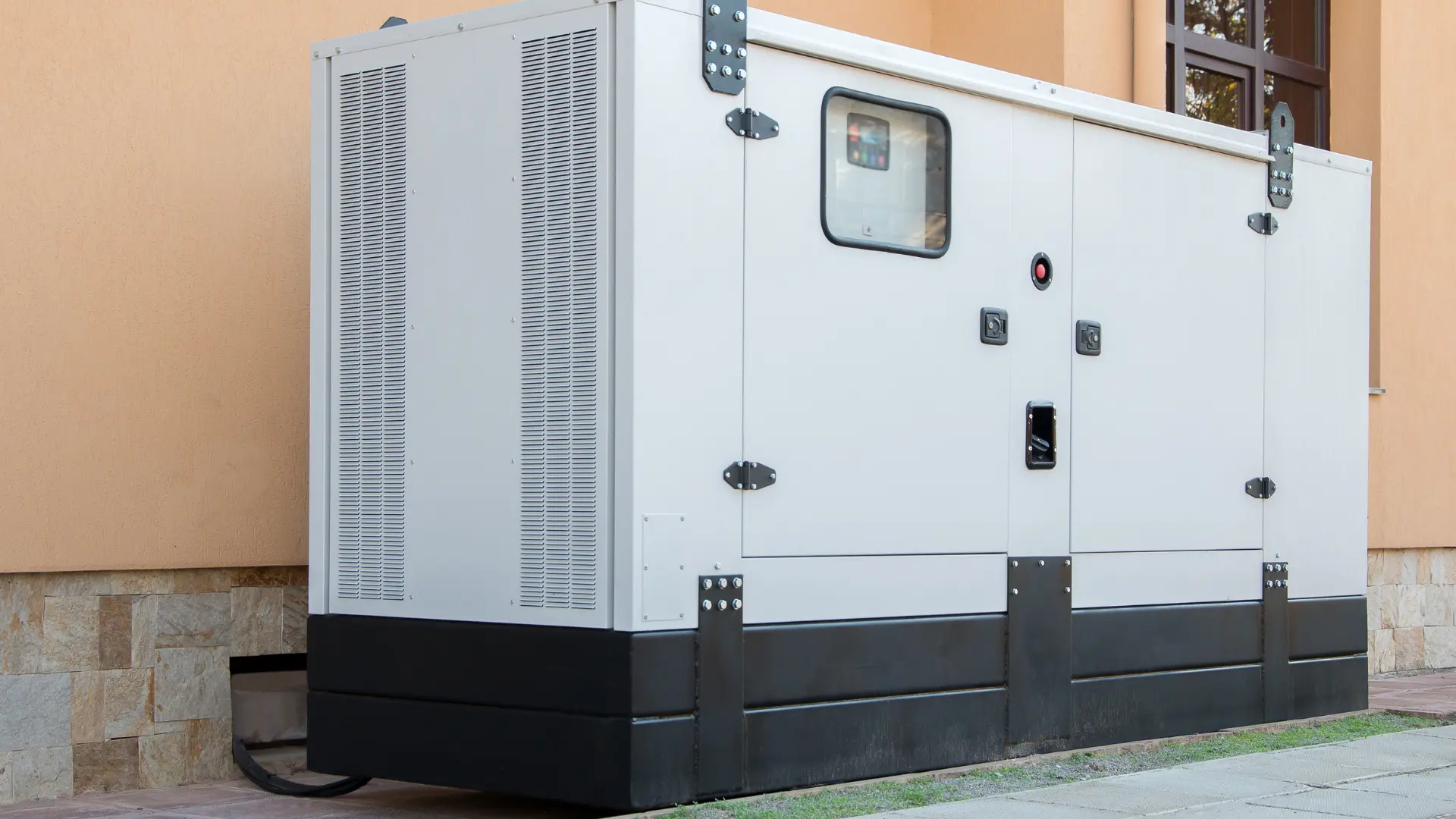
Standby units earn their price on unattended starts and duration. Manufacturers rate them for up to 500 continuous hours, roughly three weeks, and the units last 15 to 30 years. Natural gas models tie into your existing gas line with no fuel to store, and running cost is $30 to $40 a day for a 20 kW unit on natural gas versus $150 to $170 a day on propane. That fuel gap matters a lot over a three-day shutoff.
Propane makes sense anyway for foothill homes without natural gas service, but budget $400 to $1,800 for the tank on top of everything else.
The 2028 CARB Deadline Quietly Changes the Math on Portables
Here is something you will not find on most generator pages, and it should affect your timing.
The California Air Resources Board tightened emissions standards for new small off-road engines, the category that includes portable generators. Standards got 40 to 90 percent stricter for model year 2024 equipment, and a second phase sets a zero-emission standard for newly manufactured generators sold in California starting with model year 2028.
Two practical takeaways. First, nobody is coming for the generator in your garage. CARB has been explicit that Californians can keep operating CARB-compliant gas equipment they already own, and buying used is not restricted. Second, if your plan is a gas portable, the selection of new units sold in California gets narrower over the next few years, and battery or dual-fuel alternatives are where the market is heading.
If you have been circling a portable purchase for two seasons, that is a mild argument for doing it now rather than in 2029. It is not an argument for panic buying, and any installer who tells you the state is about to confiscate your generator is selling you something.
What Size Generator Does a Sacramento Home Actually Need?
Sizing gets botched in both directions here, and the reason is specific to our climate: air conditioning.
In most of the country, a September outage means you want the fridge and some lights. In Sacramento, a September outage at 102 degrees means the AC is not optional, particularly for older residents. And a 4-ton central air conditioner draws about 8,500 running watts. Startup surge can run close to double the running figure. That single load is the difference between a 7 kW generator and a 20 kW generator.
| Generator size | Unit price | Realistic coverage |
|---|---|---|
| 2 – 5 kW | $250 – $1,400 | One appliance and a few lights |
| 7 – 10 kW | $2,000 – $3,000 | Fridge, lights, microwave, TV, furnace fan, garage door |
| 13 – 16 kW | $3,000 – $4,500 | A full home under 1,500 sq ft |
| 17 – 20 kW | $4,000 – $6,000 | A full 1,500 to 3,000 sq ft home, central AC included |
| 22 – 25 kW | $4,500 – $12,000 | A full 3,000 to 5,000 sq ft home |
Source: HomeGuide, 2026, unit prices only. Most Sacramento-area homes that want AC coverage land in the 17 to 20 kW band.
There is a cheaper way through this. A smart load manager costs $130 to $250 and sheds or staggers big loads so a smaller generator can cover more house. Pairing a 16 kW unit with load management often beats buying a 22 kW unit outright. We would rather do the load calculation and talk you down a size than sell you capacity you will never use. If you want to understand your own numbers first, our breakdown of how many amps your home really needs covers the same math from the service side.
One more sizing trap: if your panel is already at its limit, adding a generator does not fix that. Homes still on 100-amp service with a heat pump and an EV frequently need an electrical panel upgrade before or alongside the generator work, and that belongs in the same quote rather than showing up as a surprise.
Backfeeding Is the Thing That Actually Kills People
Every PSPS season, somebody plugs a portable generator into a dryer outlet with a double-ended cord and calls it a day. It is common enough to have a nickname, and the nickname is grim for a reason.
Two things happen. Power flows backward out of your panel into the utility drop, where it hits the transformer on your street and gets stepped back up to line voltage. A lineman working what he has every reason to believe is a dead circuit can be killed by your generator. Meanwhile the male-to-male cord leaves live prongs exposed on one end at all times.
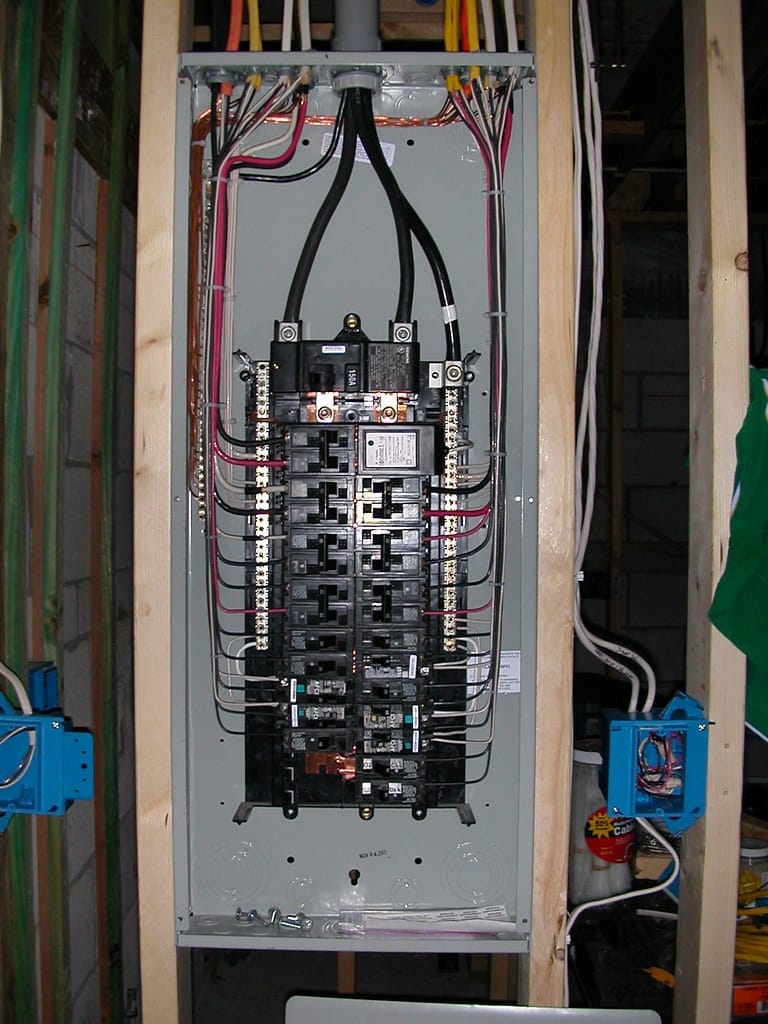
Code exists to prevent exactly this. Any generator connected to a home’s wiring needs either a transfer switch or a listed interlock, so the generator and the utility can never be connected simultaneously. That is not a permit technicality. It is the entire point.
The other killer is carbon monoxide, and it is quieter. Portable generators belong outside, well away from doors, windows, and vents, never in a garage even with the door open. HomeGuide puts the minimum at five feet from any opening, and further is better. Sacramento County’s own outage guidance says the same thing and recommends CO detectors on every floor. If yours are older than ten years or you are not sure they exist, that is a $200 fix that matters more than the generator does.
Worth noting on the electrical side: the switchover moment is hard on electronics. A whole-home surge protector is a reasonable add-on when you are already opening the panel, and it is far cheaper installed at the same time than as a separate trip.
Which Permits Does Generator Installation in Sacramento Require, and Who Issues Them?
More than people expect, and often more than one department.
An interlock or transfer switch is electrical work and needs an electrical permit. A standby generator usually needs that plus a plumbing or mechanical permit for the gas connection, and sometimes a separate review for the concrete pad and setbacks. HomeGuide puts total permit costs at $80 to $450 for a typical residential install, though that varies by jurisdiction and valuation.
Where you pull them depends on your address, and the boundaries surprise people:
- Inside Sacramento city limits, permits go through City of Sacramento Community Development
- Carmichael, Fair Oaks, Orangevale, Arden-Arcade, Gold River, and Rosemont are unincorporated, so they permit through the Sacramento County Building Permits and Inspection Division on the Accela portal, electronic submittal only
- Citrus Heights, Roseville, Folsom, Elk Grove, and Rancho Cordova each run their own building departments
- Foothill addresses fall under Placer County or El Dorado County, or the cities of Auburn or Placerville
Setbacks and noise are the two things that get generator installs red-tagged. Standby units run 60 to 70 decibels at 25 feet, similar to a central AC condenser, and tighter urban lots amplify that. Some jurisdictions have noise ordinances that dictate where the unit can sit. Getting the placement approved before the pad is poured saves a genuinely expensive mistake.
Three Questions That Separate Real Generator Installers From Electricians Who Will Try
- Who handles the gas side, and are they licensed for it? Electrical and gas are separate licenses. Ask who is doing which and get both names
- Will you pull the permits under your own license? If an installer asks you to pull an owner-builder permit, the liability lands on you instead of them
- What load calculation are you basing the size on? A real answer references your panel, your AC tonnage, and your actual circuits, not a square footage rule of thumb
Also verify the license yourself rather than taking anyone’s word. Ours is C-10 #1099728, and it takes about a minute to look up on the California Contractors State License Board site at cslb.ca.gov. We are family owned, we have been working in Sacramento-area homes for over 10 years, and we hold a 4.9 out of 5 across 226 plus reviews with a BBB A rating. Check all of it.
Why Generator Installation in Sacramento Books Out Before PSPS Season
The regional pattern is consistent. August through October is when Red Flag Warnings stack up, when PG&E runs most of its shutoffs, and when demand for installers spikes across the whole region at once.
A standby install is not a same-week job even in a slow month. There is a site visit and load calculation, equipment ordering, a permit application, a concrete pad that needs to cure, electrical and gas rough-in, then inspection scheduling that runs on the jurisdiction’s calendar rather than yours. Four to eight weeks from signed quote to working generator is normal. In September it stretches.
Interlocks and transfer switches move much faster, often a single day of work plus inspection, which is another argument for that route if you are reading this in the middle of fire season and want something functional this month.
Spring is the cheap season for this work. Everybody is thinking about it in September and nobody is thinking about it in March, and the March version of the project has better equipment availability and a calmer schedule. Sacramento’s summer load also stresses the same panels and circuits a generator ties into, which is why we see so many heat-driven electrical failures in exactly the weeks when generator demand peaks.
What We Would Tell a Neighbor
If you are on SMUD in the valley, in Sacramento, Citrus Heights, Fair Oaks, or Orangevale, and your outages last hours rather than days, buy an interlock and a good portable. Total under $3,000, covers the fridge and enough comfort to ride it out, and you are not financing a standby unit for a risk you do not actually carry.
If you are on PG&E in the foothills, in Auburn or El Dorado Hills, a standby unit with an automatic transfer switch is the honest recommendation. Multi-day shutoffs are a real and repeating pattern there, and a portable you have to babysit and refuel every eight hours stops being charming on day two.
If anyone in the house depends on powered medical equipment, size for the equipment plus cooling and go automatic regardless of utility. Also register for your utility’s medical baseline program, which is free and gets you advance notification.
And if your real problem turns out to be a generator you already own that will not start, that is troubleshooting and repair work, not a new install. We would rather fix the one you have. Running a commercial property instead? Our commercial generator guide covers the different sizing and code path for business installs.
Have a project in mind? Request a free estimate from Old Town Electric, or give us a call at (916) 307-0990. We serve Sacramento, Citrus Heights, Carmichael, Fair Oaks, Orangevale, Roseville, Folsom, Auburn, El Dorado Hills, and the surrounding area.