Quick Answer: Fixr puts most home EV charging installs around $1,000 to $2,500 (national average about $1,200). Angi reports a typical install band near $554 to $1,380 (average about $967). In SMUD territory, Charge@Home program data shows a median about $1,100 for the circuit alone and about $1,746 when the charger and circuit are both installed, before rebates. Sacramento totals swing on panel capacity, run length, and City vs County permits.
Searches for Level 2 EV charger installation cost California still surface the same national roundups with a city name pasted on top. After Google’s August 2026 spam update, those thin cost clones lost visibility fast. Homeowners in Sacramento, Elk Grove, Roseville, and Citrus Heights need local utility math, not a statewide guess with no source line.
Old Town Electric Inc. is a Sacramento C-10 shop (CSLB #1099728). We install Level 2 circuits and chargers across the metro, pull permits, and work with SMUD paperwork when the job qualifies. This guide cites named sources only. It is a planning page, not a fixed bid.
How much does Level 2 EV charger installation cost in California?
Start with published national ranges, then compare them to SMUD’s own Charge@Home medians later on this page.
Fixr (updated January 31, 2025) lists a national average range of $1,000 to $2,500 for home EV charging station installation, with most people near $1,200 for a 240-volt outlet, Level 2 charger, and wall-mounted setup. Fixr’s high end reaches about $4,500 when a dual-car layout, pedestal, and panel upgrade stack. Fixr prices Level 2 hardware around $600 to $1,200 and typical Level 2 labor around $420 to $800 on a clean run.
Angi (2026 data, updated July 9, 2026) puts professional EV charger installation around $554 to $1,380, averaging about $967. Angi frames Level 2 hardware-plus-install around $700 to over $2,000, electrician labor around $400 to $1,200, and many permit fees around $100 to $200. Angi also notes panel upgrades around $800 to $2,000 when the panel cannot carry the load, and new wire pulls around $500 to $1,500 when the path is not simple.
Those are planning bands. California labor, AHJ fees, outdoor weatherproofing, and older 100-amp panels push many invoices toward the middle or high end of Fixr’s $1,000 to $2,500 frame once the charger, breaker, conduit, and inspection are all in.
| Scope (named-source frame) | Published range | Source |
|---|---|---|
| National home EV charging install | About $1,000-$2,500 (avg ~$1,200) | Fixr 2025 |
| Professional install band / average | About $554-$1,380 (avg ~$967) | Angi 2026 |
| Level 2 hardware + install framing | About $700-$2,000+ | Angi 2026 |
| Level 2 charger hardware (materials) | About $600-$1,200 | Fixr 2025 |
| Level 2 labor (typical) | About $420-$800 | Fixr 2025 |
| Electrician labor framing | About $400-$1,200 | Angi 2026 |
| Permit fees (common national) | About $100-$200 | Angi 2026 |
| Panel upgrade add-on (if needed) | About $800-$2,000 | Angi 2026 |
| SMUD median: EV circuit only | About $1,100 (min $238 / max $6,382) | SMUD Charge@Home (past 12 months) |
| SMUD median: charger + circuit | About $1,746 (min $800 / max $5,320) | SMUD Charge@Home (past 12 months) |
For how we scope local work after a walkthrough, see our EV charger installation service page. That is the money page behind this cost guide.
What do SMUD Charge@Home costs look like in Sacramento?
This is the Sacramento angle most statewide cost posts skip.
SMUD publishes Charge@Home program medians from residential projects through its Contractor Network over the past 12 months. The average median for an EV circuit installation is about $1,100 (minimum $238, maximum $6,382). The average median for an EV charger plus EV circuit installation is about $1,746 (minimum $800, maximum $5,320). SMUD states those averages are before SMUD, statewide, or federal credits.
That local dataset sits inside Fixr’s national $1,000 to $2,500 band. It also shows why one California number for every ZIP fails: SMUD jobs already span from a few hundred dollars to past $5,000 when the run, panel, or mount gets hard.
Much of Sacramento proper is SMUD territory. Metro edges can be PG&E or a city utility. Rebates and rate discounts follow the utility on the bill. If your bill is SMUD, use SMUD numbers first. If it is PG&E, check that utility’s EV pages instead of copying SMUD figures.
What factors change Level 2 EV charger installation cost?
National averages assume a clean garage wall a short distance from a panel with spare capacity. Sacramento-area houses often break that assumption.
- Distance from the panel drives copper, conduit, and labor. A short garage run stays near the Fixr labor band. Long paths through finished walls, attic, or exterior stucco climb fast. Angi flags new wire pulls around $500 to $1,500 when the path is not simple.
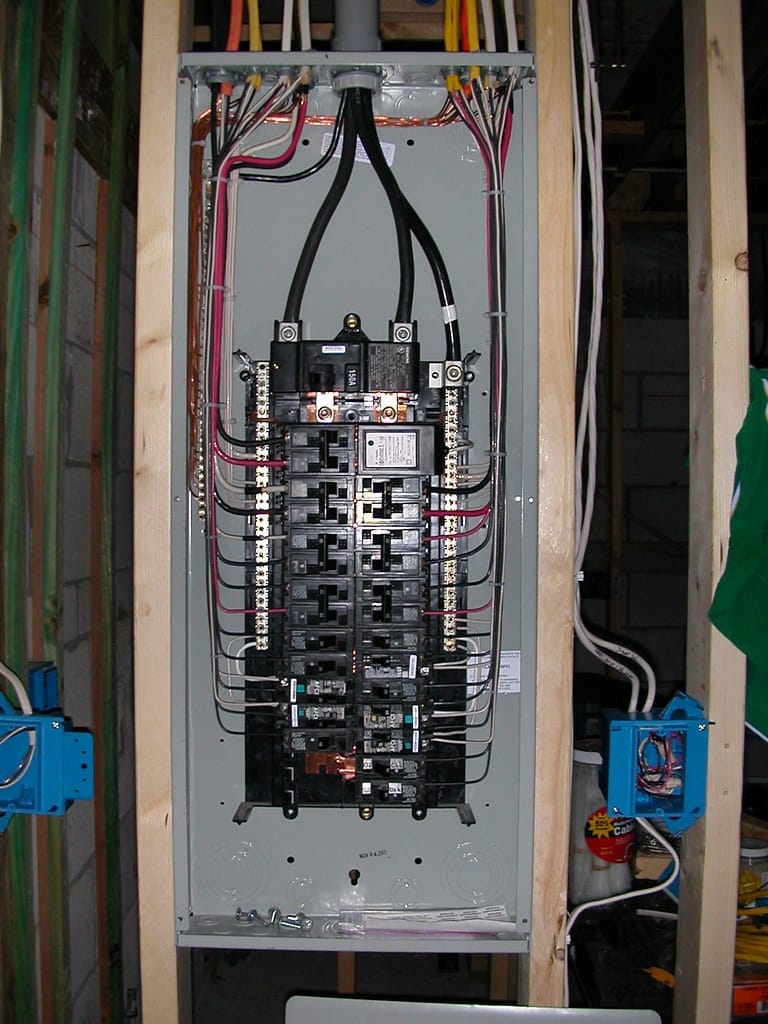
- Panel capacity and open breaker spaces decide whether you get a dedicated 40- or 50-amp circuit, a load-management device, or a panel conversation. Many 1950s-1980s homes in East Sacramento, Land Park, Curtis Park, and older Elk Grove or Citrus Heights stock still show crowded 100-amp mains.
- Indoor garage mounts are usually simpler than outdoor pedestal or driveway installs. Fixr lists many interior installs around $800 to $1,500 and exterior work about $800 to $2,500 when weatherproofing stacks.
- Hardwired vs NEMA 14-50 plug-in changes labor and flexibility. Fixr puts many hardwired installs around $850 to $1,800 and plugged-in around $1,000 to $2,200, depending on whether the 240-volt outlet already exists.
- Permit timing varies by City of Sacramento, Sacramento County (unincorporated), and each suburb desk. Angi cites many national permit fees around $100 to $200; local invoices follow the AHJ.
If a quote only says “charger install” with no line for conduit length, load calculation, or permit, ask for those items before you compare bids.
Do you need a panel upgrade for a Level 2 charger?
Not always. SMUD says a panel upgrade is not automatic for home charging. A circuit-sharing device can let a dryer and an EV charger share one circuit. An energy management device can throttle the charger so the main breaker does not overload. SMUD offers up to $200 toward qualifying circuit-sharing or energy management devices on its residential EV pages.
When a load calculation still shows the main is undersized, or the panel is a problem brand with no safe spaces left, a panel upgrade or service heavy-up enters the conversation. Angi frames many panel upgrades around $800 to $2,000 as a planning add-on. Local work can land higher once utility disconnect, meter gear, and grounding are included. Background: our Sacramento-area electrical panel upgrade and repair page and heavy-up electrical service upgrade guide.
Do not guess from breaker labels. A licensed C-10 should run the calculation, then tell you whether a dedicated circuit, share device, subpanel, or heavy-up is the honest path.
Are there SMUD rebates for a home EV charger?
Yes, for SMUD residential customers who meet Charge@Home rules. SMUD states the program can pay up to $600 toward EV charging equipment and installation. Paths include buying a qualifying charger yourself, hiring an electrician who processes the rebate, or checking income-eligible / EAPR options. SMUD also lists up to $200 for qualifying circuit-sharing or energy management devices.
Income-eligible customers should also read SMUD’s Clean Cars 4 All notes (up to $2,000 toward charging equipment on that program page) and free charger / installation pathways for qualifying households. Funding changes. Recheck smud.org before you buy hardware.
SMUD also offers an EV rate discount: register a plug-in EV at the same service address and get a 1.5 cent discount on all electric usage between midnight and 6 AM. That is not an install rebate, but it cuts overnight charging cost.
Federal Section 30C generally ended for property placed in service after June 30, 2026, per the U.S. Department of Energy Alternative Fuels Data Center and 26 USC 30C. Installs completed on or before that date may still be claimable on a 2026 return if other IRS rules were met. New residential installs after that date should not budget a federal charger credit unless Congress changes the law. Confirm with a tax professional.
PG&E and other non-SMUD utilities run their own programs. We do not invent their dollar amounts here. Check the utility on your bill.
How do City vs County permits work for EV chargers in the Sacramento area?
Most California AHJs treat a new 240-volt EV circuit as permitted electrical work. Angi notes California permit expectations for new outlet / charging work; local desks set the fee and review path.
City of Sacramento addresses go through City Community Development / Permit Services. Unincorporated Sacramento County addresses use County Building Permits and Inspection. Roseville, Elk Grove, Citrus Heights, Folsom, and other suburbs use their own desks. The tax address controls the desk, not the Maps label.
A licensed C-10 pulls the permit, sizes the circuit, and meets the inspector. DIY 240-volt work is how homeowners get red tags and failed inspections. Call (916) 307-0990 if you want us to walk the site and handle paperwork for your ZIP.
Hardwired vs NEMA plug-in: which costs less?
It depends on what already exists on the wall.
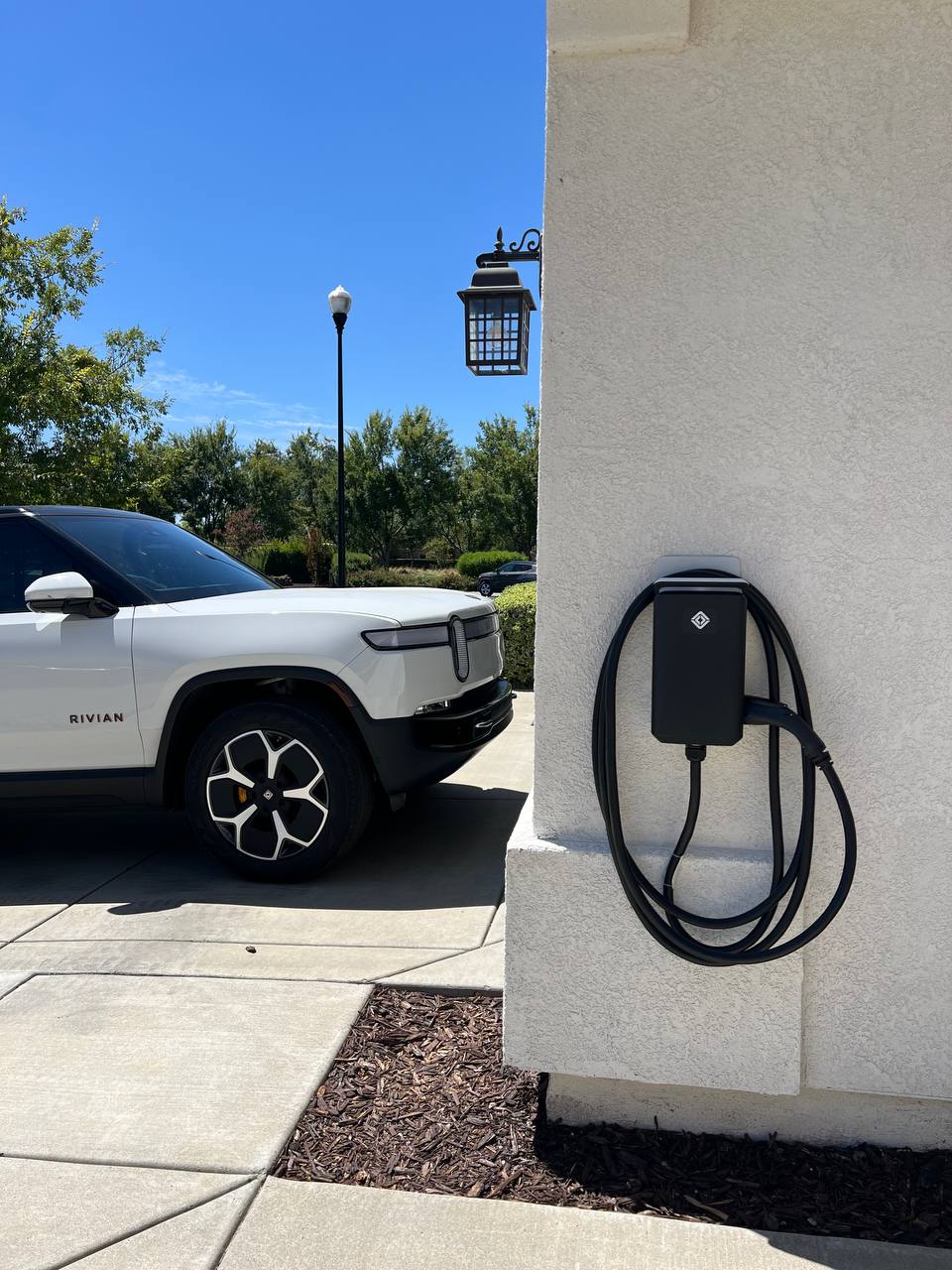
If you already have a correctly installed, dedicated NEMA 14-50 on a proper breaker, a plug-in Level 2 unit can be cheaper and stays portable. If that outlet does not exist, you pay for the circuit either way. Fixr puts many hardwired jobs around $850 to $1,800 and many plugged-in jobs around $1,000 to $2,200 when outlet and charger are both in scope.
Hardwired installs often look cleaner outdoors and can pair more easily with load-management gear. Some AHJs prefer hardwired outdoor EVSE. Plug-in setups help when you may move the charger later, but only when the receptacle and circuit meet code. Buy a UL- or ETL-listed EVSE, then let the load calculation set the breaker size.
When is a Level 2 charger worth it at home?
SMUD notes Level 1 (120-volt) adds about 3 to 5 miles of range per hour and can cover short commutes, especially with the midnight to 6 AM discount. Level 2 (240-volt) adds 25+ miles per hour depending on output, and SMUD frames many empty-to-full Level 2 sessions around 4 to 8 hours.
Level 2 is usually worth it when you drive 35+ miles most days or need a full turnaround without public DC fast chargers. It is less urgent if a working Level 1 cord already covers a short commute overnight.
Public charging is the comparison. Angi cites home full charges for a standard-sized EV around $2.50 to $14 versus many public sessions around $12 to $24. Your SMUD bill and the midnight discount change that math more than a national average does.
Bottom Line
Budget with Fixr’s $1,000 to $2,500 national frame and Angi’s roughly $554 to $1,380 professional install band, then check SMUD’s Charge@Home medians if your meter is SMUD: about $1,100 for the circuit and about $1,746 for charger plus circuit before rebates. Apply for up to $600 Charge@Home help and the up-to-$200 share-device path when you qualify. Get a load calculation before you buy a panel upgrade you may not need.
If you want a walkthrough quote in the Sacramento area, call Old Town Electric at (916) 307-0990 (CSLB #1099728) or use our contact page. Start on the EV charger installation service page for scope and next steps. We pull the permit, size the circuit, and tell you honestly when a share device beats a heavy-up.
Sources
Fixr.com – Cost to Install EV Charger at Home (updated January 31, 2025): national average range about $1,000-$2,500 (avg ~$1,200); Level 2 hardware about $600-$1,200; Level 2 labor about $420-$800; hardwired installed about $850-$1,800; plugged-in installed about $1,000-$2,200; interior about $800-$1,500; exterior about $800-$2,500; high end about $4,500 with panel upgrade / dual setup.
Angi – A Complete Guide to Electric Vehicle Charging Installation Costs [2026 Data] (updated July 9, 2026): professional install about $554-$1,380 (avg ~$967); Level 2 about $700-$2,000+; electrician labor about $400-$1,200; permits often about $100-$200; panel upgrades about $800-$2,000; new wiring pulls about $500-$1,500; home vs public charge cost notes about $2.50-$14 vs $12-$24.
SMUD – Residential electric vehicles / Charge@Home: up to $600 toward EV charging equipment and installation; up to $200 for circuit sharing or energy management devices; median EV circuit install about $1,100 (min $238 / max $6,382); median charger + circuit about $1,746 (min $800 / max $5,320) from Contractor Network residential projects over the past 12 months before credits; Level 1 about 3-5 miles/hour; Level 2 about 25+ miles/hour and often 4-8 hours empty to full; EV rate discount 1.5 cents/kWh midnight-6 AM when a plug-in EV is registered to the service address; Clean Cars 4 All charging equipment note up to $2,000 for income-eligible customers (verify current rules on smud.org).
U.S. Department of Energy Alternative Fuels Data Center – Alternative Fuel Infrastructure Tax Credit (Section 30C): residential credit generally available for qualified property placed in service through June 30, 2026; listed as expired for later placed-in-service dates; confirm IRS rules for any claim.
26 USC 30C – Alternative fuel vehicle refueling property credit: section does not apply to property placed in service after June 30, 2026 (verify current Code text).
City of Sacramento Community Development – Permit Services (City addresses).
Sacramento County Department of Community Development – Building Permits and Inspection Division (unincorporated addresses).
Contractors State License Board (CSLB) – C-10 Electrical Contractor classification and public license check.
Old Town Electric Inc. – CSLB #1099728; Sacramento-area EV charger installation.