Quick Answer: The 2025 California Electrical Code (Title 24, Part 3), based on the 2023 National Electrical Code, took effect statewide on January 1, 2026. New permit applications after that date get judged on expanded GFCI and AFCI rules, kitchen island receptacle options, and related Title 24 EV-ready requirements in CALGreen. Older finished rooms are not auto-retrofitted until you remodel, add circuits, or open permitted work.
If you searched 2025 California Electrical Code after a remodel bid or a sale inspection, you probably saw the same national listicle copied across contractor sites. Most of those posts blur the CEC with CALGreen, invent “every receptacle in the house needs GFCI,” and skip the Sacramento desk that actually stamps your permit.
Old Town Electric Inc. is a Sacramento C-10 shop (CSLB #1099728). We pull permits and meet inspections across Sacramento, Elk Grove, Roseville, and nearby cities. This guide sticks to named code parts, real effective dates, and how the rules show up on local jobs. It is not a substitute for the published Title 24 text or your Authority Having Jurisdiction (AHJ).
When did the 2025 California Electrical Code take effect?
California publishes the California Building Standards Code as Title 24. Part 3 is the California Electrical Code (CEC). The California Building Standards Commission (CBSC) published the 2025 triennial edition on or before July 1, 2025, with a statewide effective date of January 1, 2026 for Part 3 (same effective date for most other Title 24 parts; Part 1 Administrative has a separate earlier date that does not change the electrical effective date).
The 2025 CEC is based on the 2023 NEC (NFPA 70), with California amendments. That one-cycle lag is normal in California. When a trade article says “NEC 2023,” and a California inspector says “2025 CEC,” they are often talking about the same model-code cycle with state amendments layered on top.
Practical rule for homeowners and GCs: permit applications submitted on or after January 1, 2026 are reviewed under the 2025 codes unless the AHJ documents a different transition rule for that project. Work already permitted under the 2022 cycle generally stays on the code edition named on the approved plans. Ask the desk if you are unsure which edition your open permit uses.
What GFCI changes actually apply under the 2025 CEC?
GFCI protection for dwelling units lives mainly in CEC / NEC 210.8(A). The 2023 NEC language that California adopted expands voltage coverage and tightens location rules. It does not require GFCI on every receptacle in every room of a house.
What changed in ways remodelers feel on Sacramento jobs:
- Listed dwelling locations require GFCI for 125-volt through 250-volt receptacles on single-phase branch circuits rated 150 volts or less to ground, not only classic 125-volt duplexes.
- Kitchens: all receptacles in the kitchen area need GFCI, not only the ones that serve countertops.
- Basements: finished and unfinished basement receptacles are in the GFCI list under the adopted 2023 language.
- Laundry areas: receptacles in the laundry area need GFCI, which often includes the dryer receptacle when it falls in that voltage range.
- Outdoor outlets and related dwelling outdoor rules in 210.8(F) continue to push protection onto outdoor equipment outlets, with published exceptions (including a time-limited HVAC-related exception path that expires September 1, 2026 in the model text). Confirm the exact exception language with your AHJ before you replace outdoor HVAC disconnects.
- Specific appliances in 210.8(D) add GFCI for listed equipment such as ranges, wall ovens, counter-mounted cooking units, and microwaves within the stated voltage and ampere limits.
What did not change: a living-room lamp circuit in a finished room you never open does not magically need a GFCI breaker because the calendar flipped. Remodel scopes, new receptacles in listed locations, and replacement rules in 406.4(D) are what pull older homes onto the new list. For device-level how-to and DIY limits, see our GFCI outlet installation guide.
Do kitchen islands still need receptacles under the 2025 code?
This is one of the few residential changes that surprises both homeowners and designers, and national roundups often get it wrong.
Under the 2023 NEC island and peninsula rules adopted into the 2025 CEC (210.52(C)), a receptacle outlet serving an island or peninsula countertop is optional. If you do not install one now, you still have to provide a provision for a future receptacle (commonly a raceway, junction box, or other AHJ-accepted rough-in path). If you do install a receptacle to serve that surface, placement rules tightened: face-up countertop receptacles are restricted, and side-mounted receptacles below the countertop no longer count as serving the work surface the way older cycles allowed.
City kitchen remodel handouts across California already quote this pair of rules next to GFCI for countertop receptacles and AFCI for kitchen circuits. On a Sacramento remodel, plan the island early. Waiting until cabinet install to “find a place for an outlet” is how projects fail rough inspection.
Where do AFCI and dual-function breakers show up on remodel jobs?
AFCI protection for dwelling units is in 210.12. For single-phase 120-volt branch circuits rated 10, 15, or 20 amperes that supply outlets or devices in kitchens, family rooms, dining rooms, living rooms, bedrooms, hallways, laundry areas, and similar rooms, AFCI protection is required. Kitchen and laundry work that already needs GFCI therefore often needs both protections on the same circuit.
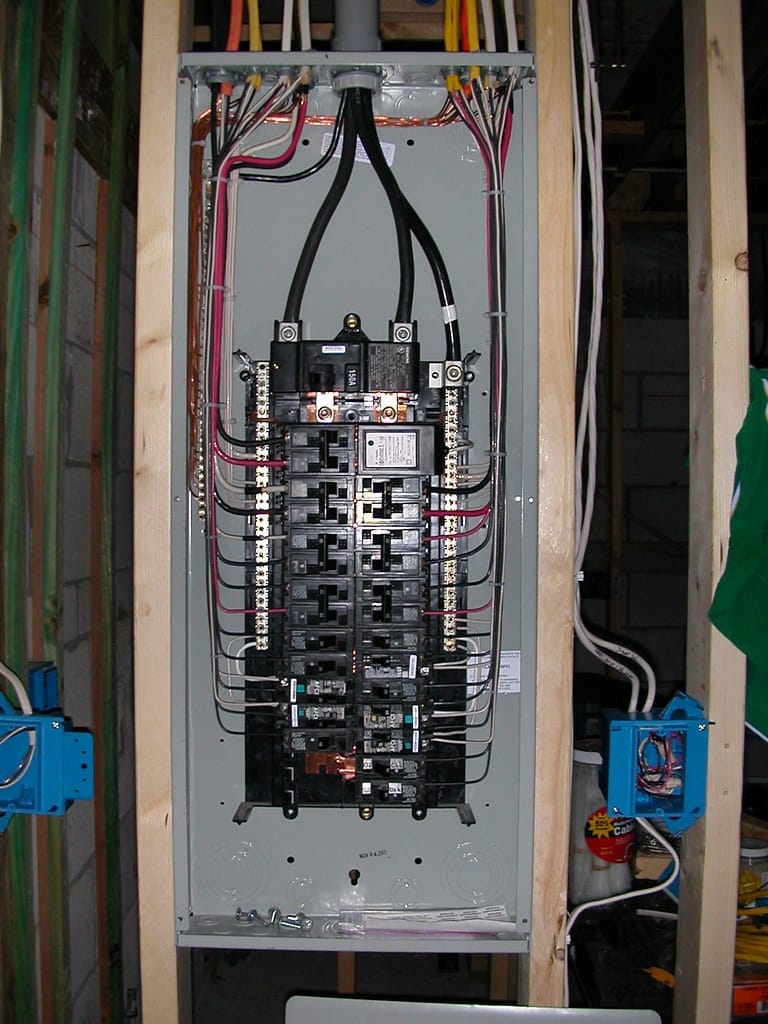
That overlap is why dual-function AFCI/GFCI breakers show up on so many 2026 remodel quotes. They cost more than a plain breaker. They also eat panel spaces and can nuisance-trip on shared neutrals or damaged cable that older homes hide. A 100-amp Federal Pacific, Zinsco, or crowded 1970s panel that “has one empty slot” is often the real bottleneck, not the $25 receptacle on the bid line.
Tamper-resistant (TR) receptacles under 406.12 remain required for the listed 15- and 20-amp, 125- and 250-volt nonlocking receptacles in dwelling locations. TR is not a kids-only rule. Inspectors treat it as standard dwelling device stock on new and remodel work.
When a kitchen, laundry, or multi-room refresh needs new branch circuits, see our circuit replacement and installation page. When the panel is full of dual-function breakers and EV capacity talk starts, the parent money page is electrical panel upgrades in Sacramento.
How do CALGreen EV-ready rules fit next to the CEC?
EV infrastructure for new residential construction is not a CEC novelty paragraph. The mandatory measures live mainly in the 2025 California Green Building Standards Code (CALGreen, Title 24 Part 11), Section 4.106.4, with the same January 1, 2026 effective date as the rest of the 2025 Title 24 package.
For new one- and two-family dwellings and townhouses with parking, CALGreen 4.106.4.1 requires either a dedicated EV branch circuit or an EV-capable path: typically a raceway from the panel location to the EV spot, space and capacity reserved in the load center (commonly described as 40-ampere, 208/240-volt capacity in agency checklists), and permanent “EV CAPABLE” labeling at the panel and endpoint. Multifamily parking rules in 4.106.4.2 push much harder toward low-power Level 2 receptacles at assigned spaces plus installed Level 2 chargers in a share of common spaces. Read the occupancy path that matches the project; do not paste multifamily percentages onto a single-family garage.
The CEC still governs how that circuit is wired, protected, and inspected once you install it. CALGreen decides whether the building must be ready. That split is the detail thin “2025 electrical code” posts usually mash together.
On existing Sacramento houses, EV work is a permit and load-calculation problem, not an automatic retrofit mandate. SMUD customers can check current Charge@Home incentives (SMUD publishes up to $600 toward qualifying charger or circuit work) and circuit-sharing device rebates. Incentive rules change, so verify on SMUD’s site before you bid the job. For installation scope, start at our EV charger installation service page.
How do City of Sacramento and Sacramento County apply the new code cycle?
The published CEC is statewide. The inspector who walks your garage works for a local AHJ.
City of Sacramento. Addresses inside city limits use City Community Development for building permits. Residential electrical scopes such as panels, rewires, new circuits, and EV charger circuits follow the City’s minor-permit and plan-review tracks. Confirm current submittal rules on the City portal for the address.
Unincorporated Sacramento County. Arden-Arcade, Fair Oaks, Carmichael pockets, and other unincorporated addresses use the County Building Permits and Inspection Division, not the City login. Same CEC, different counter, fee schedule, and inspection booking system.
Incorporated suburbs. Elk Grove, Roseville, Citrus Heights, Rancho Cordova, Folsom, and others adopt the statewide Title 24 package and may add local administrative amendments. Always match the building department to the tax address.
Two non-climate checks we run on every remodel or panel job: (1) which AHJ owns the address, and (2) whether the person offering the electrical work holds a current C-10 on the CSLB license check. Utility territory is a third practical check. Much of Sacramento proper is SMUD. Nearby cities can be PG&E. Service upgrades, meter releases, and interconnection paperwork follow the utility, not the blog post you read.
We do not invent HOA electrical rules here. If a planned development controls exterior conduit or charger placement, get the written architectural rule from the association. That stack is separate from the building permit.
What should Sacramento homeowners do before a 2026 remodel or panel upgrade?
Use this pre-bid checklist. It is written for occupied houses, not for reading every Article in NFPA 70.
- Ask which Title 24 edition the bid assumes. After January 1, 2026, new applications should name the 2025 package unless the AHJ says otherwise.
- Photograph the panel directory, available breaker spaces, and main breaker size before you price GFCI/AFCI upgrades or an EV circuit.
- Separate “device swap in the same box” from “new circuit / remodel / panel.” Different permit paths. See our outlets and switches page for device-level work.
- For kitchen remodels, decide island receptacle now vs future provision before cabinets are ordered.
- If the home is on a 100-amp service and you want range, dryer, heat-pump air, and EV capacity, budget a load calculation and possible heavy-up early. Background: our heavy-up service upgrade guide.
- Verify the contractor’s CSLB number. Ours is #1099728.
- If you are on SMUD and electrifying appliances, ask whether any current Go Electric / Charge@Home pathways apply. Do not assume a blog rebate number still funds next month.
Smoke alarms and carbon monoxide alarms often ride along on remodel permits through the Residential Code and Fire Code, not only the CEC. Hardwired, interconnected units with battery backup remain the normal expectation when the permit scope triggers alarm upgrades. Confirm with the AHJ for the rooms you are opening.
Bottom Line
The 2025 California Electrical Code is the 2023 NEC in California clothes, effective January 1, 2026. The parts that change remodel pricing are wider GFCI location and voltage rules, AFCI overlap that pushes dual-function breakers, kitchen island receptacle options with future provisions, and CALGreen EV-ready mandates on new residential parking. Existing rooms stay as they are until permitted work pulls them forward.
Skip national posts that claim every receptacle in the house suddenly needs GFCI or that bury EV rules inside the CEC. Match the AHJ to the Sacramento address, check panel capacity before you promise EV or dual-function breakers, and hire a licensed C-10 who will open the real code book with the inspector. That is the useful version of this topic after Google’s August 2026 spam update punished thin clones.
Planning a remodel, panel upgrade, or EV circuit under the 2025 codes? Call Old Town Electric at (916) 307-0990 (Mon-Fri 8-6) or use our contact page. Ask for a free estimate on the work you actually need permitted.
Sources
California Building Standards Commission – 2025 California Building Standards Code (Title 24) publication and January 1, 2026 effective date; Part 3 California Electrical Code.
California Department of General Services / DSA and CBSC bulletins – 2025 Title 24 effective dates (Part 3 effective January 1, 2026).
2025 California Electrical Code (Title 24 Part 3) based on NFPA 70, 2023 National Electrical Code – GFCI 210.8, AFCI 210.12, island/peninsula receptacles 210.52(C), tamper-resistant receptacles 406.12, appliance GFCI 210.8(D), outdoor outlets 210.8(F).
2025 California Green Building Standards Code (CALGreen, Title 24 Part 11) Section 4.106.4 – EV charging for new residential construction (including 4.106.4.1 one- and two-family / townhouse EV capable or branch-circuit options).
City of Sacramento Community Development – building / minor electrical permit tracks for panels, rewires, new circuits, and EV charger circuits (confirm current portal rules for the address).
Sacramento County Department of Community Development – Building Permits and Inspection Division (unincorporated addresses; separate from City permits).
SMUD – Charge@Home EV charger / circuit incentives and related residential EV guidance (verify current rebate amounts and eligibility on smud.org before relying on a dollar figure).
Contractors State License Board (CSLB) – C-10 Electrical Contractor classification and public license check.
Old Town Electric Inc. – CSLB #1099728; Sacramento area residential and remodel electrical work.