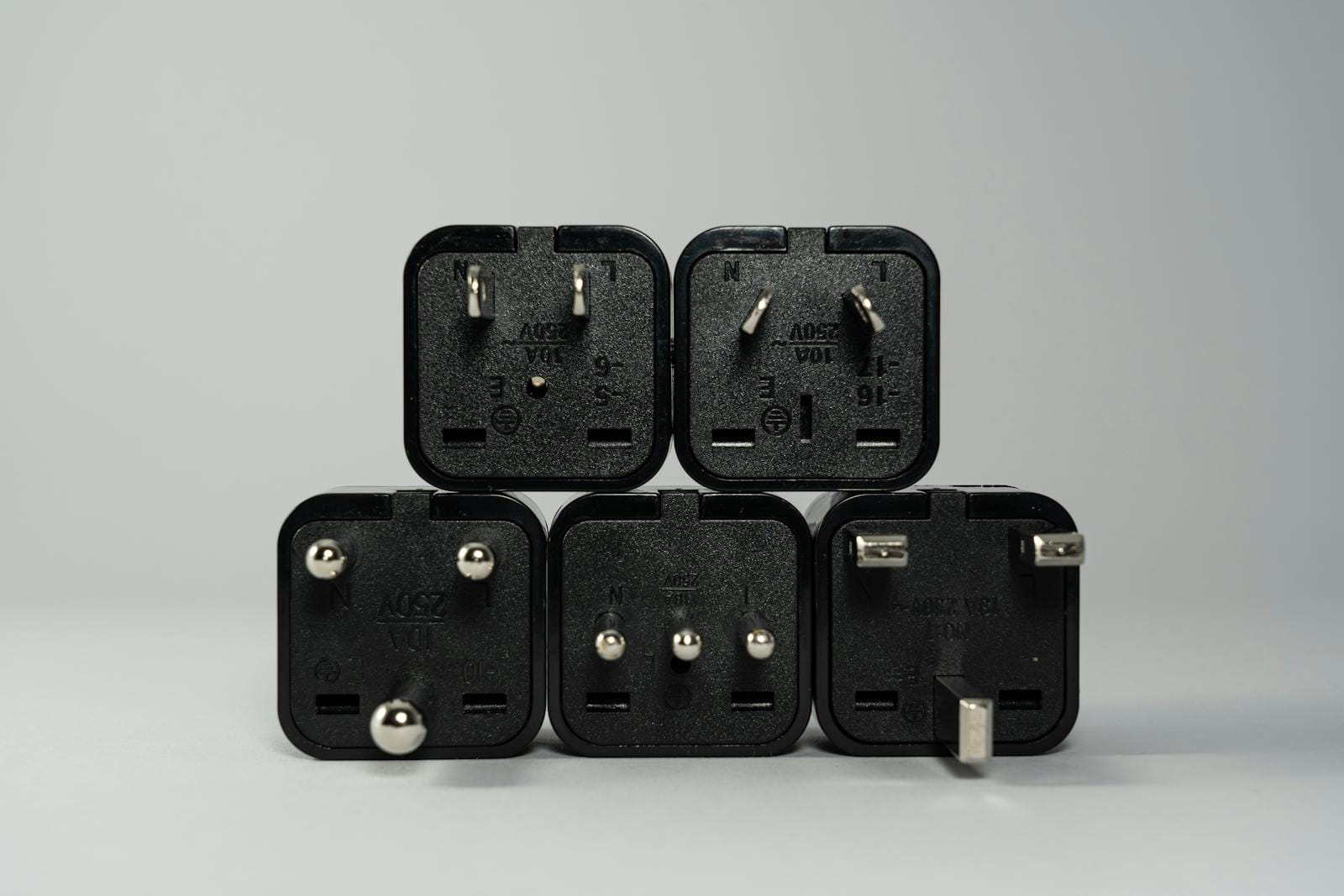
Quick Answer: A 240 volt outlet uses two hot legs to feed dryers, ranges, welders, and Level 2 EV circuits that a standard 120V receptacle cannot carry. HomeGuide puts most 220/240V outlet installs around $250 to $800 (national average near $450). In Sacramento, new circuits usually need a City or County permit, and SMUD Charge@Home EV circuit rebates cap the breaker at 40 amps. Match the NEMA type to the appliance, then get a walkthrough quote.
Searching 240 volt outlet Sacramento often returns the same national explainer with a city name pasted on top: vague amperage notes, an uncited cost table, and a DIY wiring list that ignores local desks. That pattern is how thin how-to pages look after Google’s August 2026 spam update. Homeowners still need a clear fork for dryer, range, and EV loads, plus the permit and utility rules that actually apply here.
Old Town Electric Inc. is a Sacramento C-10 shop (CSLB #1099728). We install and upgrade 240V receptacles across Sacramento, Elk Grove, Roseville, Citrus Heights, and nearby cities. This page is a planning guide with named sources. It is not a fixed bid and it is not a DIY install manual for panel work.
What is a 240 volt outlet and how is it different from 120V?
Most wall receptacles in a Sacramento home are 120 volts: one hot, one neutral, and a ground. A 240 volt outlet takes power from two hot legs that each sit about 120 volts from neutral. Measured hot-to-hot, you see roughly 240 volts. That higher voltage is how electric dryers, ranges, many heat-pump water heaters, shop welders, and Level 2 EV equipment get the wattage they need without drawing twice the amperage on a single hot.
People still say “220” for the same class of receptacle. HomeGuide treats 220V, 240V, and 250V outlet ratings as the same family for planning purposes. What changes the job is amperage, wire size, breaker type, and whether the device needs a neutral.
| Feature | Typical 120V receptacle | Typical 240V receptacle |
|---|---|---|
| Voltage | About 120V hot to neutral | About 240V hot to hot |
| Common uses | Lamps, TVs, small appliances | Dryer, range, EV, welder, some A/C |
| Breaker | Single-pole | Double-pole (both hots trip together) |
| Wiring sketch | Hot + neutral + ground | Two hots + ground; many also need neutral |
You cannot safely force a 120V plug into a 240V receptacle, and you should never adapt a high-load appliance down to a standard duplex. Wrong voltage and wrong NEMA configuration are how cords melt and breakers nuisance-trip.
Which NEMA 240V outlet do dryer, range, and EV chargers need?
NEMA is the configuration name stamped on the receptacle face. Matching the plug is not optional. The three Sacramento calls we see most often are dryer, range, and EV.
| NEMA type | Typical rating | Wires | Common Sacramento use |
|---|---|---|---|
| NEMA 14-30 | 30A, 125/250V | 2 hots + neutral + ground | Modern electric dryer |
| NEMA 10-30 | 30A, 125/250V | 2 hots + neutral (no ground) | Older dryer circuits still found in mid-century laundry rooms |
| NEMA 14-50 | 50A, 125/250V | 2 hots + neutral + ground | Range / oven, RV, many plug-in Level 2 EV setups |
| NEMA 6-50 | 50A, 250V | 2 hots + ground (no neutral) | Welders; some EVSE brands that do not need neutral |
Dryers usually land on a 30-amp circuit. Ranges and many plug-in EVSE units land on a 50-amp circuit. HomeGuide notes that dryers commonly need a 30-amp outlet while many EV charging stations are planned around a 50-amp receptacle, with continuous EV load limited by the National Electrical Code 80% rule. On a 50-amp breaker that continuous ceiling is 40 amps. That continuous-load math matters more for overnight charging than for a dryer that cycles.
Bring the appliance nameplate or the EVSE manual to the walkthrough. A NEMA 14-50 and a NEMA 6-50 are both “50-amp 240V” in casual talk, but they are not interchangeable. Forcing a mismatched plug is a safety failure, not a clever adapter trick.
How much does a 240 volt outlet cost to install in Sacramento?
Start with named national ranges, then adjust for run length, finished walls, and panel capacity.
HomeGuide (2026 update) puts the cost to install a 220V or 240V outlet at about $250 to $800, with a national average near $450 and a published span from about $100 to $1,500. Their factor table lists receptacle hardware around $8 to $30, breakers about $5 to $40, wire materials often in a $30 to $40 planning band for short runs, electrician labor about $50 to $130 per hour, and permit fees often about $30 to $80 for a single new 240V outlet (higher when several electrical scopes share one permit). HomeGuide also prices a dedicated circuit at about $250 to $900 installed (national average near $650), and notes a 120V-to-240V “conversion” costs the same band as a new 240V install because new heavier-gauge cable and a correct double-pole breaker are required.
Angi (2026 outlet cost guide) frames professional outlet installation around $100 to $450 per outlet, with an average near $300 for typical receptacle work, and lists heavy-duty 220/240/250V receptacle hardware around $10 to $20. Angi is useful for device and labor framing; the HomeGuide 240V-specific band is the cleaner planning range for a dedicated dryer or range circuit.
Fixr (January 2025) puts many home Level 2 EV charging station installs around $1,000 to $2,500 nationally, with a common figure near $1,200 when a 240-volt outlet, Level 2 charger, and wall mount all land on a clean run. That EV package is wider than a receptacle-only dryer job.
| Scope (named-source frame) | Published range | Source |
|---|---|---|
| 220/240V outlet install | About $250-$800 (avg ~$450) | HomeGuide 2026 |
| Dedicated circuit (often includes outlet or hardwire) | About $250-$900 (avg ~$650) | HomeGuide 2026 |
| Typical professional outlet install framing | About $100-$450 (avg ~$300) | Angi 2026 |
| Heavy-duty 220/240/250V receptacle (hardware) | About $10-$20 | Angi 2026 |
| Level 2 EV package (outlet + charger + mount) | About $1,000-$2,500 (common ~$1,200) | Fixr 2025 |
| Panel upgrade add-on when capacity is short | About $1,300-$4,000 | HomeGuide 2026 |
Sacramento totals climb when the laundry is far from the panel, walls are finished, the breaker space is full, or the inspector expects GFCI protection on the new branch. Treat the HomeGuide $250 to $800 band as the receptacle-circuit planning frame, not an invoice. For how we scope local receptacle work after a walkthrough, see our Sacramento electrical outlet and switches page. That is the service page behind this guide.
Do you need a permit for a new 240V circuit in Sacramento?
Usually yes for a new circuit. A same-box swap of an existing 240V receptacle is a different conversation than pulling new cable and a new double-pole breaker.
City of Sacramento. Inside city limits, Community Development runs permits. The City’s Minor Permits track for residential electrical work includes main and sub service panels, rewire work, ceiling fans, whole-house fans, and new electrical circuits. New EV charger circuits require plan review submittal rather than a plain field-only minor path. A brand-new dryer or range circuit is still permitted electrical work even when it is not an EV job.
Unincorporated Sacramento County. Addresses outside city limits use the County Building Permits and Inspection Division. County FAQ language lists electrical panel and circuit work among projects that need permits under the CBC/CRC Section 105 framework. Do not assume a City portal login covers an Arden-Arcade, Fair Oaks, Carmichael, or other unincorporated address.
Incorporated suburbs. Elk Grove, Roseville, Citrus Heights, Rancho Cordova, Folsom, and neighbors run their own building departments. Same statewide California Electrical Code, different counters and fee schedules.
For the narrower question of when a like-for-like receptacle swap can skip a permit, see our California outlet replacement permit guide. Adding voltage, amperage, or new cable leaves that like-for-like lane.
Why do older Sacramento homes still have 3-prong dryer outlets?
Many 1950s-1980s laundry rooms still have a NEMA 10-30 style dryer receptacle: two hots and a neutral, no separate equipment ground. Newer dryers ship with four-prong cords that expect a NEMA 14-30 (two hots, neutral, and ground). Code for new installs and many remodel scopes wants the grounded four-wire arrangement.
HomeGuide notes 3-slot devices for older large appliances and 4-slot devices for appliances made in 1996 or later, and prices the receptacle hardware itself in the low tens of dollars. The expensive part is almost never the face. It is whether the existing cable already has a ground path, whether the panel bonding is correct, and whether the AHJ treats the laundry update as a simple device change or as a circuit update that needs inspection.
Do not “fix” a four-prong dryer by stripping the ground or using a cheater adapter on a three-wire receptacle. That is how laundry rooms get shock and fire risk. If the dryer is new and the wall is old, plan the receptacle and cord as a matched pair on a walkthrough.
What does SMUD change about EV 240V outlet planning?
Most Sacramento and Elk Grove addresses take electric service from the Sacramento Municipal Utility District (SMUD). Roseville city limits use Roseville Electric. That utility split changes rebate paperwork more than it changes the physics of 240 volts.
SMUD’s Charge@Home program offers customers up to $600 toward eligible EV charging equipment and/or circuit installation, plus up to $200 for eligible circuit-sharing or energy-management devices. Program rules (verify on smud.org before you buy) require a dedicated EV charging circuit served by a maximum 40-amp breaker, with wire no larger than #8 copper for the rebate path, a clearly labeled breaker, and installation by a California licensed contractor. Eligible Level 2 chargers on SMUD’s list are capped around 32 amps output on that 40-amp circuit.
That is why a “just put in a 50-amp NEMA 14-50” plan can miss the rebate even when the receptacle itself is common for plug-in EVSE. If you want Charge@Home dollars, size the circuit to the program rules first, then pick hardwired vs plug-in hardware that matches. For full Level 2 cost context, see our EV charger installation service page and the related cost guide on this site.
SMUD does not replace the building permit. City or County still inspects the branch circuit. Utility rebate paperwork and AHJ inspection are parallel tracks.
When does a 240V outlet job turn into a panel upgrade?
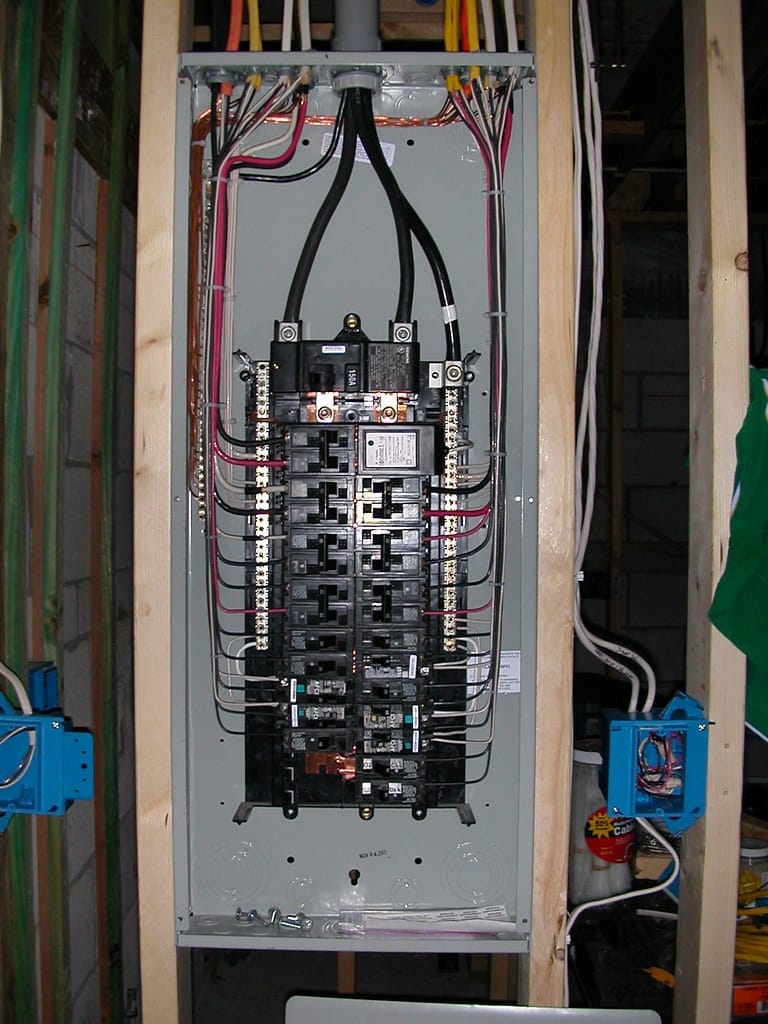
A short dryer run into an open 200-amp panel with spare slots is a branch-circuit job. The same receptacle request becomes a service conversation when:
- The main panel is full and you cannot add a correctly sized double-pole breaker.
- The existing service is 100 amps and you are stacking dryer, range, HVAC, and EV continuous load.
- The panel is a known legacy brand or has damage, overheating, or double-tapped lugs an inspector will reject.
- The meter or service entrance conductors have to change with the new load.
HomeGuide lists panel upgrades around $1,300 to $4,000 depending on amperage, and subpanels around $500 to $1,700 when the main can feed a remote board. Those are national planning bands. Local heavy-up and SMUD disconnect timing can push schedules more than materials.
If the walkthrough shows capacity risk, we pause the receptacle quote and scope the panel path first. See our Sacramento-area electrical panel upgrade and repair page when the conversation leaves a single branch circuit.
What should you look for before hiring an electrician for 240V work?
Verify the CSLB license (ours is #1099728 for Old Town Electric Inc.). Confirm the quote names the NEMA type, breaker amperage, wire size, permit desk, and whether GFCI protection is included for the location. Ask whether the price assumes open attic access or fishing finished walls. Ask who schedules the inspection.
Warning signs on an existing 240V receptacle:
- Warm faceplates or plugs under normal load
- Discoloration, melted plastic, or a burning smell
- A wobbly receptacle that does not clamp the plug tightly
- Breakers that trip when the dryer or charger runs as designed
- A three-prong dryer outlet feeding a four-prong cord through an adapter
Those symptoms are stop-and-call problems. De-energize if you smell burning, and do not keep using the circuit “until the weekend.”
Bottom Line
Pick the NEMA configuration from the appliance or EVSE nameplate, budget from HomeGuide’s $250 to $800 240V install band (and Fixr’s wider EV package when a charger is included), and match the permit desk to the tax address. For SMUD customers chasing Charge@Home, plan the EV circuit to the 40-amp program rules instead of defaulting to a generic 50-amp internet diagram.
If your Sacramento, Elk Grove, or Roseville home needs a dryer, range, or EV receptacle and the panel still has room, a licensed C-10 install with inspection is the clean path. If the panel is full or the laundry still has a three-wire dryer outlet, solve bonding and capacity before you buy the appliance cord.
Ready for a walkthrough on a 240 volt outlet in Sacramento? Call Old Town Electric at (916) 307-0990 (Mon-Fri 8-6) or use our contact page. Ask for a free estimate and bring the appliance model or EVSE manual if you have it.
Sources
HomeGuide – Cost to Install a 220V or 240V Outlet (2026 update); Cost to Install a New Dedicated Circuit (2026).
Angi – Cost To Install Outlet (2026 data), including heavy-duty 220/240/250V receptacle hardware framing.
Fixr – Cost to Install an Electric Vehicle Charging Station (updated January 31, 2025).
City of Sacramento Community Development – Minor Permits page (residential electrical minor work; new electrical circuit; EV charger circuits require plan review).
Sacramento County Building Permits and Inspection – FAQ (electrical panel / circuit among permit-required project types; CBC/CRC Section 105 framing).
SMUD Charge@Home incentive pages and Terms and Conditions – up to $600 equipment/circuit; up to $200 share/energy-management device; dedicated EV circuit maximum 40-amp breaker; verify current rules on smud.org.
National Electrical Code continuous-load 80% rule for EV charging branch-circuit planning (NEC framework as adopted in the California Electrical Code).
Contractors State License Board (CSLB) – C-10 Electrical Contractor license verification for California (#1099728 for Old Town Electric Inc.).