Quick Answer: In California you can usually replace an outlet without a permit when the swap is like-for-like in the same box, on the same circuit, with no new cable, no relocation, and no change in voltage or amperage. New circuits, moved boxes, kitchen or bath remodels that open walls, and panel work need a permit from the correct city or county desk. Confirm the Authority Having Jurisdiction (AHJ) for your address before you start.
Homeowners who search replace outlet without permit usually have a cracked faceplate, a loose receptacle, or a two-prong outlet that will not hold a plug. The device costs a few dollars. The decision that matters is whether your city or county treats the job as exempt maintenance or as regulated electrical work that needs a permit and inspection.
Old Town Electric Inc. is a Sacramento C-10 shop (CSLB #1099728). We replace receptacles across Sacramento, Elk Grove, Roseville, and nearby cities, and we pull permits when the scope leaves the like-for-like lane. This guide is built for California and the Sacramento Valley desks, not a national copy-paste answer.
Can you replace an outlet without a permit in California?
Statewide practice tracks the California Building Code and California Residential Code permit framework (CBC/CRC Section 105). Most jurisdictions require a permit to install, alter, repair, or replace electrical systems regulated by the code. The usual carve-out is minor like-for-like maintenance: swap the receptacle in the existing box for the same type and rating, leave the wiring method alone, and do not extend or relocate the circuit.
That exemption is from the permit process. It is not a free pass to ignore the California Electrical Code (CEC). A like-for-like swap still has to be safe, correctly polarized, and properly secured. If the box has damaged conductors, aluminum branch wire you are not trained to terminate, melted insulation, or no equipment ground where the new device assumes one, stop. The permit question becomes secondary to the safety question.
California also updates the CEC on a three-year cycle. The 2025 California Electrical Code (Title 24 Part 3), based on the 2023 NEC, took effect statewide on January 1, 2026. Remodel scopes and new circuits get judged against current code. A simple device swap in an existing finished space does not magically force every nearby receptacle onto the newest GFCI list, but opening a kitchen or bath remodel often does.
How do City of Sacramento and Sacramento County treat outlet swaps differently?
The safety code is statewide. The desk that issues (or skips) your permit is local. That split is the local detail most statewide blogs skip.
City of Sacramento. Properties inside city limits go through the City Community Development Department. The City publishes a Minor Permits track for residential electrical work that includes main and sub service panels, rewire work, ceiling fans, whole-house fans, and new electrical circuits (EV charger circuits need plan review). A plain same-box receptacle replacement is not on that minor-permit list because it is typically treated as exempt maintenance when nothing else changes. The moment you add a circuit, open a remodel, or rewire, you are on the City desk.
Unincorporated Sacramento County. Addresses outside city limits use the County Building Permits and Inspection Division, not the City portal. County FAQ language points owners to CBC/CRC Section 105 and lists electrical panel and circuit work among projects that need permits. Do not assume a City email permit or City portal login covers an Arden-Arcade, Fair Oaks, or other unincorporated address.
Incorporated suburbs. Elk Grove, Roseville, Citrus Heights, Rancho Cordova, and other cities run their own building departments. Same statewide CEC, different counters, fee schedules, and online systems.
Practical rule: look up the building department that matches the tax address, not the ZIP on your Amazon package. City vs county is one of the two non-climate local checks we use on every outlet call. The other is CSLB licensing (next section).
We do not invent HOA rules here. If you live in a condo or planned development, ask the board for the written architectural rule that covers exterior covers or conduit. Building permits and private association rules are separate stacks.
When does a like-for-like outlet swap stop being like-for-like?
Use this fork. If you answer yes to any line below, plan on a permit conversation with the AHJ and usually a licensed electrician.
- You are moving the box to a new wall location or cutting a new opening.
- You are running new cable from the panel or from another box.
- You are changing voltage or receptacle rating (for example, adding a 240-volt receptacle for a range, dryer, or EVSE).
- The outlet work is part of a kitchen or bathroom remodel that already needs inspection.
- You are tying the swap into panel work, a new branch circuit, or a service upgrade.
- You are converting an ungrounded two-wire circuit in a way that needs new grounding conductors or a different protection scheme than a labeled GFCI replacement allows.
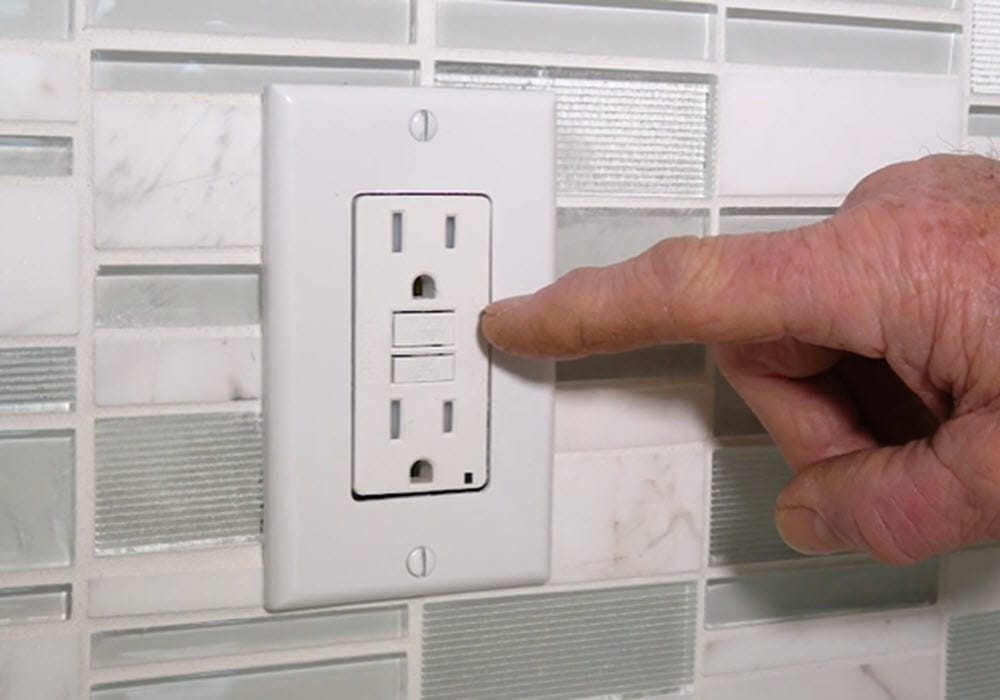
Gray area that trips people: swapping a standard duplex for a GFCI receptacle in the same box. Many AHJs still treat a same-box device upgrade as maintenance when no new cable is pulled. Others look harder when the room is part of an open remodel permit. Ask the desk for your address if the job sits next to a kitchen, bath, garage, or outdoor circuit that already has inspection paperwork.
Another gray area: replacing several receptacles on one string during a sale punch list. One worn living-room duplex is usually simple. A full wet-location GFCI pass across baths, kitchen, garage, and exterior often grows into documented code work. For location rules on GFCI devices, see our GFCI outlet installation guide.
What does the CSLB allow homeowners and contractors to do?
Permits answer “does the city or county want paperwork.” The Contractors State License Board answers “who is legally allowed to offer the work.”
Electrical contracting offered to the public in California requires a C-10 Electrical Contractor license. Old Town Electric is CSLB #1099728. Before anyone opens your panel or pulls cable in your walls, ask for the license number and verify it on the CSLB license check. An unlicensed “handyman special” on a receptacle can become a claim problem later even if the faceplate looks fine.
Owner-occupants of a single-family home can often perform work on their own residence under local owner-builder rules, but they still have to follow code and pull permits when the AHJ requires them. Owner-builder does not mean “hire an unlicensed person and pretend you did it.” If you pull an owner-builder permit, you are the responsible party for the work and the inspection.
Landlords, flippers, and anyone hiring out the labor should not treat owner-builder as a loophole. Contracted electrical work belongs with a licensed C-10. That is the second non-climate local signal we lean on: CSLB verification plus the correct AHJ desk.
What happens if you skip a required electrical permit?
Skipping a required permit is how small jobs turn into expensive ones later.
- Insurance: carriers can challenge claims after a fire or shock event when unpermitted electrical alterations show up in the investigation.
- Resale: home inspectors and buyer agents in Sacramento flag open electrical work, missing GFCI protection in wet locations, and evidence of DIY splices. Sellers then scramble for permits after the fact.
- Retroactive permitting: some jurisdictions allow legalization with exposure, corrections, and extra fees. That path costs more than pulling the right permit up front.
- Safety: the inspection is not theater. Field checks catch reverse polarity, bootleg grounds, oversized breakers, and shared neutrals that a phone photo of a new outlet will miss.
If you already finished work and are unsure whether it needed a permit, call the building department for the address and ask about legalization options before you list the home. Do not cover evidence of work and hope the buyer skips the inspection.
What should you check before you replace an outlet yourself?
A careful DIY like-for-like swap is possible for some homeowners. Be honest about skill level.
- Shut off the correct breaker. Verify the receptacle is dead with a non-contact tester, then a plug-in tester or multimeter.
- Photograph the wire positions before you loosen anything.
- Match amperage and configuration (15-amp vs 20-amp, Tamper-Resistant where required, Weather-Resistant outdoors).
- Stop for aluminum branch conductors, burned insulation, loose backstabs, shared neutrals you do not understand, or a metal box with no ground path.
- Confirm you are not relocating the box or adding cable. Those leave the exempt lane.
After the new receptacle is installed, restore power and test polarity and ground. If the breaker trips, the receptacle feels hot, or other outlets on the string go dead, stop and call a licensed electrician. For broader dead-circuit or trip diagnosis, use our electrical troubleshooting and repair services page.
When should you call a licensed electrician for outlet work?
Call a C-10 electrician when any of these apply:
- You need new circuits, relocated boxes, outdoor conduit, or a 240-volt receptacle.
- The outlet work is bundled with a kitchen, bath, or laundry remodel that already needs inspection.
- The panel is full, damaged, or known problem stock, and the receptacle job is really a capacity problem.
- You found two-wire ungrounded branches, aluminum conductors, or melted devices.
- You are clearing a sale inspection punch list across multiple rooms.
- You cannot prove the circuit is de-energized or you are not comfortable working in a live panel environment.
For receptacle and switch work in Sacramento, the parent service page is our electrical outlets and switches service page. When the job grows into new branch circuits, see circuit replacement and amp installation in Sacramento. Panel capacity limits often surface during multi-outlet upgrades; that path is covered on our electrical panel upgrades page.
We tell you when a permit is required for your address, pull it on the correct desk, and meet the inspection when the scope needs one. We also tell you when a same-box swap does not need that paperwork so you are not paying for theater.
Bottom Line
You can replace an outlet without a permit in California when the job stays like-for-like in the same box with no new wiring, no relocation, and no voltage or amp change. Leave that lane for new circuits, remodeled wet rooms, 240-volt devices, and panel work, and the City of Sacramento, Sacramento County, or your suburb AHJ will want a permit.
Match the building department to the address. Verify any hired electrician on the CSLB site. If the box hides damaged wire, missing grounding, or a circuit you do not fully understand, hire a licensed C-10 instead of guessing. That combination beats another generic “maybe you need a permit” article when Google is rewarding unique, locally useful answers.
Need a same-day outlet swap or a permit-ready upgrade in Sacramento? Call Old Town Electric at (916) 307-0990 (Mon-Fri 8-6) or use our contact page. Ask for a free estimate on the receptacles you want fixed first.
Sources
California Building Code / California Residential Code Section 105 – permits required and work exempt from permit (AHJ administration).
2025 California Electrical Code, Title 24 Part 3 – based on the 2023 NEC; statewide effective January 1, 2026 (California Building Standards Commission).
City of Sacramento Community Development – Minor Permits page (residential electrical minor work scopes: panels, rewire, ceiling fans, whole-house fans, new circuits; EV charger circuits require plan review).
City of Sacramento Community Development – Required Building Permits / permit services guidance (electrical system alterations generally require permits; confirm exemptions with the City for the address).
Sacramento County Department of Community Development – Building Permits and Inspection Division FAQ (permit required language for electrical systems; refer to CBC/CRC 105.2 and consult the Division for the specific project).
Contractors State License Board (CSLB) – C-10 Electrical Contractor license classification and public license check.
Old Town Electric Inc. – CSLB #1099728; service area Sacramento, Elk Grove, Roseville, and nearby cities.