Quick Answer: A subpanel is a smaller breaker box fed from your main service so you can add circuits for a garage, ADU, shop, or remodeled wing without stuffing the main panel. In Sacramento homes, the safe path is a load calculation first, then a permitted feeder with the right wire size, grounding, and breaker. City of Sacramento and Sacramento County use different portals. SMUD handles the meter side when the main service changes. Old Town Electric (CSLB #1099728) wires and permits this work.
Homeowners search wiring electrical subpanel when the main panel is full, the garage needs power, or a Level 2 charger will not fit on leftover ampacity. A subpanel is not a shortcut around a weak main. It is a clean way to distribute branch circuits after you confirm the service can feed them.
This guide covers what a subpanel does, what you need before any wire is pulled, the steps a licensed crew follows, the safety rules that fail inspections, and when to stop DIY. It is written for Sacramento-area homes on SMUD or edge utilities, with City vs County permit notes. It is not a DIY license to open a live panel.
What Is a Subpanel, and When Do You Need One?
A subpanel is a downstream breaker enclosure. The main panel (or meter-main) feeds it through a dedicated breaker and feeder cable. Inside the subpanel you land branch circuits for lights, receptacles, tools, HVAC, or an EV circuit in that building or wing.
Common Sacramento triggers:
- A 1950s-1980s 100-amp main that is already packed, while the garage or ADU needs new circuits.
- A detached garage or shop that should not run on extension cords.
- A remodel that adds kitchen or laundry load on a separate floor or wing.
- An EV charger or heat pump that needs its own breaker space after the load calc clears.
If the main service itself is undersized for the new load, a subpanel alone will not fix it. You need a Sacramento-area panel upgrade first, then the subpanel. Elk Grove jobs follow the same logic on the city permit path: see electrical panel upgrade in Elk Grove.
What Do You Need Before Wiring a Subpanel?
Start with paper, not pliers.
Load calculation. Add continuous and noncontinuous loads the way the California Electrical Code (based on the NEC) requires. A garage EV circuit at 40-60A continuous can wipe out spare capacity on a 100-amp service. Guessing ampacity is how breakers trip and inspections fail.
Feeder size and breaker. The feeder ampacity must match the subpanel bus rating and the breaker that protects it. Undersized copper or aluminum feeders are a hard fail. Aluminum needs the right lugs, torque, and antioxidant where the manufacturer allows it.
Four-wire feeders on modern installs. Hot, hot, neutral, and equipment ground. Floating neutrals bonded to the can at the subpanel are a classic hazard on older DIY jobs. Neutrals and grounds separate at the subpanel; the bond stays at the service disconnect.
Permit path. Inside City of Sacramento limits, Building Division / Accela ePermits owns the electrical permit when scope goes beyond a simple like-for-like device swap. Unincorporated Sacramento County uses the County Building Permit portal. Your address decides the office. We confirm it on the estimate instead of guessing from a map pin.
Utility. Most Sacramento metro meters sit on SMUD. A feeder and subpanel on an existing service often stay on the electrical permit alone. If the main breaker, meter base, or service entrance changes, SMUD scheduling enters the plan. Edge cities may sit on Roseville Electric or PG&E – we name the utility before we schedule.
Clearance and working space. Code wants clear working space in front of the panel. Crowding a subpanel behind storage shelves is a fail waiting to happen.
How Do You Wire a Subpanel Step by Step?
This is the licensed sequence we use. Homeowners should treat it as a checklist for what to expect, not a DIY how-to on a live service.
- Kill and verify. Open the main disconnect that feeds the work. Verify dead with a meter. Lockout if other trades are on site.
- Mount the enclosure. Secure the subpanel to structure at the right height with required working clearances. Outdoor or garage damp locations need the right NEMA rating and hubs.
- Pull the feeder. Run conduit or cable from the main to the subpanel. Protect conductors where they pass through framing. Keep bends and fill inside code limits.
- Land the feeder breaker in the main. Size it to the feeder and the subpanel rating. Torque to the breaker and lug specs – loose lugs arc.
- Separate neutral and ground in the subpanel. Isolated neutral bar. Grounds to the can / ground bar. No neutral-ground bond screw at the subpanel on a separately derived feeder from a bonded service.
- Land branch circuits. Hot to breakers, neutrals to the isolated bar, grounds to the ground bar. Label every circuit before the cover goes on.
- Torque, cover, test. Re-check torque. Install the cover. Energize. Test GFCI/AFCI devices that land in the subpanel. Walk breakers with the homeowner.
- Inspection. Meet the City or County inspector. Fix red tags the same week when we can.
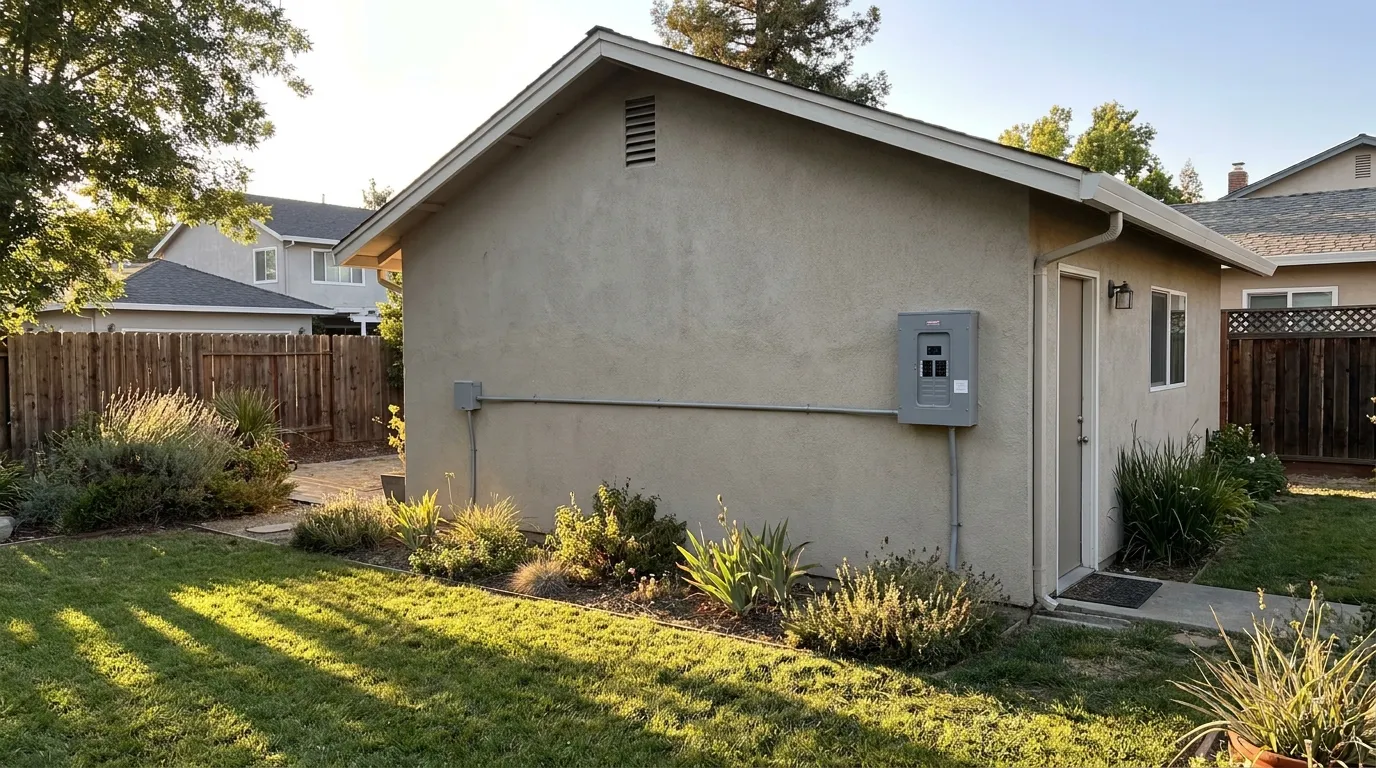
Detached structures often need an exterior disconnect and grounding electrode details that attached garages do not. We scope that on site before the bid locks.
What Safety Rules Fail Subpanel Inspections?
These show up again and again on Sacramento remodels and garage builds:
- Bonded neutral in the subpanel (parallel neutral/ground paths).
- Three-wire feeder on a new install that needs four wires.
- Feeder protected by a breaker larger than the wire or the subpanel bus.
- Double-tapped breakers or shared neutrals that were never multiwire-correct.
- Missing or undersized equipment grounding conductor.
- No working clearance, or a panel buried behind storage.
- Unlabeled breakers and no directory.
- Work done without a permit when the AHJ required one.
Federal Pacific, Zinsco, or damaged main gear is a separate conversation. We will not hang a clean subpanel on a main that is already a fire risk. That is an upgrade path, not a cover-plate fix.
How Much Does Subpanel Wiring Cost in Sacramento?
Published national ranges for a residential subpanel install often land roughly in the mid hundreds to a few thousand dollars before a main upgrade, depending on feeder length, conduit vs cable, indoor vs outdoor, and whether a trench or wall chase is required. Local price moves with:
- Distance from main to subpanel and whether the run is surface conduit or opened walls.
- Ampacity (60A vs 100A vs 125A feeders are different wire and breaker packages).
- Detached garage electrode and disconnect extras.
- Permit and inspection fees (City vs County).
- Whether the main needs repair or a full 200-amp upgrade first.
We give a written flat estimate after photos or a site visit. Call or text (916) 307-0990. We do not invent a phone quote for a buried feeder we have not seen.
City vs County and SMUD: Why Sacramento Is Different
Two homes three miles apart can hit different offices.
- City of Sacramento: City Building Division permit when the electrical scope needs one.
- Unincorporated Sacramento County: County building permit path.
- SMUD: Meter and service changes; not every indoor feeder needs a utility truck, but main upgrades and meter-base work do.
HOA exterior rules can also limit where a surface-mounted exterior subpanel can sit. We flag that when the elevation is visible from the street. License check: CSLB #1099728 on cslb.ca.gov.
When Should You Hire a Licensed Electrician Instead of DIY?
Stop DIY if any of these are true:
- You are not sure how to verify the panel is dead.
- The main is full, damaged, or a recalled brand.
- The feeder run crosses finished living space, a slab, or a trench.
- An EV charger, heat pump, or ADU load is part of the plan.
- The home will be sold soon and unpermitted work will show up in disclosure or inspection.
California requires a C-10 for this scope when it is done for hire. Old Town Electric is CSLB #1099728. We pull the permit, land the feeder, and meet the inspector.
Bottom Line
Wire a subpanel only after the load calc clears and the feeder, grounding, and permit path are correct. In Sacramento that means City vs County paperwork and SMUD coordination when the service changes. If the main cannot feed the new load, upgrade the main first, then add the subpanel. For a garage, ADU, or shop feed done once, hire a licensed crew.
Ready for a site visit or photo review? Call or text (916) 307-0990 or use the free estimate form. Panel parents: Sacramento panel upgrade and repair and Elk Grove panel upgrade.
Sources: California Electrical Code / NEC grounding and feeder rules (current CEC cycle); City of Sacramento Building Division and Sacramento County Building Permit public portals; SMUD residential service guidance; CSLB license lookup for #1099728. Cost ranges vary by scope – confirm on estimate.