Quick Answer: Sacramento kitchens, baths, laundry, garages, and outdoor receptacles need GFCI protection under the 2025 CEC. Swapping a dead GFCI on a known good circuit is a narrow DIY. New locations, multiwire branches, or a breaker that will not hold need a licensed electrician (CSLB #1099728).
A kitchen outlet that dies when the toaster and microwave share a circuit, a bathroom GFCI that will not reset, or a garage receptacle that never got protection in the first place – that is the call. We install or replace GFCIs where the 2025 California Electrical Code requires them, and we stop DIY when the fault is upstream of the device.
Old Town Electric Inc. is a Sacramento shop (CSLB #1099728). We install and replace GFCI receptacles across Sacramento, Elk Grove, Roseville, and nearby cities. This guide covers what the code actually requires, what a careful DIY swap can cover, and when we tell homeowners to put the tools down.
What is GFCI outlet installation and when do you need it?
A GFCI (ground-fault circuit interrupter) watches the current leaving and returning on a circuit. If it sees a mismatch of about 5 milliamps, it opens the circuit in a fraction of a second. That cut is meant to stop a shock when current leaks through a person or through wet material.
GFCI outlet installation usually means one of three jobs:
- Replace a standard receptacle with a GFCI receptacle at the same box.
- Add GFCI protection upstream so downstream outlets are also protected (LINE and LOAD wiring).
- Protect the whole circuit with a GFCI breaker at the panel instead of (or in addition to) a receptacle device.
You need that protection when the receptacle sits in a wet or damp-use area, when you are selling or refinancing and an inspector flags missing GFCIs, or when a remodel brings the kitchen, bath, laundry, or garage up to current code. A tripped GFCI that will not reset is also a reason to stop and test the circuit before you keep resetting it.
Where does the 2025 California Electrical Code require GFCI protection?
California now enforces the 2025 California Electrical Code (CEC), Title 24 Part 3, effective January 1, 2026. The 2025 CEC is based on the 2023 National Electrical Code (NEC / NFPA 70). The City of Sacramento adopted that package by ordinance effective the same date.
For dwelling units, NEC/CEC 210.8(A) is the section inspectors cite most often. In plain terms, 125-volt through 250-volt receptacles on single-phase branch circuits rated 150 volts or less to ground need GFCI protection in locations that include:
- Bathrooms
- Garages and accessory buildings with power
- Outdoors
- Crawl spaces at or below grade
- Basements
- Kitchens (the 2023 NEC expansion covers kitchen receptacles more broadly than older countertop-only rules)
- Areas with sinks and permanent food or beverage prep
- Receptacles within 6 feet of a sink
- Laundry areas
- Indoor damp and wet locations
- Receptacles within 6 feet of a bathtub or shower stall outside a bathroom
City of Sacramento residential checklist language tracks those 210.8(A) locations and also calls out outdoor receptacles with direct grade-level access. Outdoor wet-location receptacles need weather-resistant devices and weatherproof (in-use) covers under CEC 406.9 as applied locally.
Two notes that trip homeowners:
- The GFCI device itself must stay readily accessible. Hiding a GFCI behind a fridge or inside a locked cabinet fails that rule even if the electronics work.
- GFCI protection can be at the receptacle, at a feed-through GFCI upstream, or at a GFCI breaker. The code cares that the outlet is protected, not that every box has the TEST/RESET face.
Older Sacramento tract homes and Midtown/East Sac stock often still have plain receptacles in baths and kitchens that met the code year they were built. Remodel, replacement during a kitchen or bath job, or a failed sale inspection is usually what forces the update.
How does GFCI outlet installation differ in Sacramento, Elk Grove, and Roseville?
The electrical safety rule is statewide. The desk you pull a permit from, and the utility that owns the meter, change by address.
Utility split. Most of Sacramento and Elk Grove sit in SMUD electric territory. Roseville city limits are served by Roseville Electric Utility, not SMUD. Nearby edges can land on PG&E electric. Check the name on your bill. A simple receptacle swap does not involve the utility. A new circuit, panel change, or service upgrade can, and the paperwork path is different for each provider.
City of Sacramento permits. The City treats residential electrical minor work (panels, rewire, new circuits, and similar scopes) as a minor permit track with field inspection. Kitchen and bathroom remodeled that stay non-structural also run through remodel/minor paths. A like-for-like receptacle swap in the same box with no new wiring is often below the threshold that needs a full permit package, but adding a circuit, relocating boxes, or opening a remodel scope is not. Confirm with the City before you open walls. Skipping the permit is how a later refinance or sale stalls.
County and suburb desks. Unincorporated Sacramento County, Elk Grove, and Roseville each run their own building departments. Do not assume a City of Sacramento email permit covers an Elk Grove address.
Housing stock. 1950s-1980s Sacramento houses often still have 100-amp services, two-wire ungrounded branches, or crowded panels. A GFCI can protect people on an ungrounded circuit when installed per manufacturer instructions and code allowances, but it does not create an equipment ground. If the box has only two wires and no ground, we talk through GFCI labeling, grounding upgrades, or larger circuit work before we leave.
We do not invent HOA rules here. If your complex has an architectural review board, exterior receptacle covers and conduit routing may need their approval on top of the building permit. Ask the board for the written rule that applies to your building.
What should you check before you install a GFCI outlet yourself?
Some homeowners can replace a failed GFCI with a new one in the same box. That is only true when the circuit is straightforward and you are honest about your skill level.
Before you touch anything:
- Shut off the correct breaker and verify the receptacle is dead with a non-contact tester, then a plug-in tester or multimeter.
- Photograph the existing wire positions on LINE and LOAD before you disconnect anything.
- Confirm the box is large enough for a GFCI device (GFCIs are deeper than a standard duplex).
- Look for aluminum branch conductors, melted insulation, loose backstabs, or a missing ground. Those are stop points for DIY.
- Buy a receptacle rated for the location (WR/weather-resistant outdoors; tamper-resistant where required).
LINE vs LOAD mistakes are the most common failure we see. LINE is the incoming feed. LOAD feeds downstream receptacles you want protected. If you land the feed on LOAD, the GFCI will not power or will not protect the way you expect. If you do not need downstream protection, cap unused LOAD screws and leave them empty.
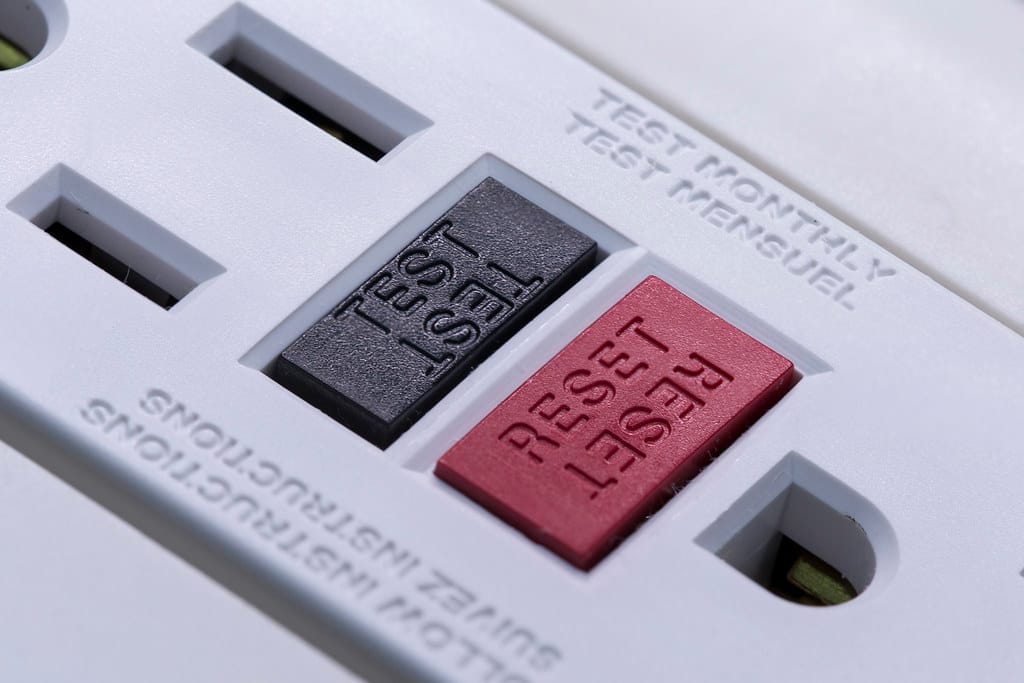
After install, press RESET, then TEST. The device should trip. Press RESET again. Plug in a GFCI tester if you have one. If it will not reset, the problem may be a real ground fault on the circuit, a miswire, or a bad device. Do not keep forcing it.
DIY stops the moment you need a new run of cable, a new breaker, a metal box that needs grounding work, or a multi-wire branch circuit you do not fully understand. At that point the risk is not a $20 device. It is shock and fire risk in finished walls.
When should you hire a licensed electrician instead of DIY?
Call a licensed electrician when any of these apply:
- The receptacle is part of a kitchen, bath, or laundry remodel that already needs inspection.
- You need new circuits, relocated boxes, or outdoor conduit.
- Breakers trip, the GFCI will not reset, or several receptacles on the string are dead.
- The panel is full, Federal Pacific / Zinsco / Pushmatic, or you already know you are short on capacity.
- You are preparing a home for sale and want the GFCI list cleared in one visit.
- You are not comfortable proving the circuit is de-energized.
California requires a C-10 electrical contractor license for electrical contracting work offered to the public. Old Town Electric is CSLB #1099728. Ask any contractor for the license number and verify it on the CSLB site before they open your panel.
For outlet and switch work across Sacramento, start with our electrical outlets and switches service page. That is the parent service page for receptacle upgrades, GFCI swaps, and related device work.
What does a professional GFCI outlet installation include?
On a typical service call we:
- Map which receptacles fail a plug-in GFCI test or lack protection in code-required rooms.
- Open the suspect boxes and check conductor condition, box fill, grounding, and LINE/LOAD layout.
- Install WR and TR devices where the location requires them, with in-use covers outdoors.
- Label downstream protected receptacles when feed-through protection is used.
- Test TEST/RESET and verify downstream protection with a tester.
- Flag panel or circuit problems that a receptacle swap cannot fix, including overloaded kitchens and shared bathroom circuits that need a dedicated 20-amp branch.
Sometimes the clean fix is a GFCI breaker instead of a device in every wet box. That can protect an outdoor string or a garage circuit from one place. We explain the tradeoff: reset happens at the panel, and some appliances are picky about nuisance trips.
If the job grows into new circuits, we pull the permit on the correct desk for your address and meet the inspector. Related work often ties to circuit replacement and amp installation in Sacramento or a larger electrical panel upgrade when the panel cannot accept another breaker safely.
We quote what we can see. Hidden damage in walls gets a call before we expand the scope.
How do you keep GFCI outlets working after they are installed?
Press TEST monthly, then RESET. If it will not trip, replace the device. If it trips and will not reset, unplug everything on that circuit and try again. A tool, holiday lights, a fridge compressor, or moisture in an outdoor cover is often the culprit.
Outdoor covers fail in Sacramento Valley sun and winter rain. Cracked in-use covers let water sit on the face. Replace them early. Garage GFCIs that feed freezers should be tested with a plan for food if the circuit opens while you are away.
Nuisance trips on refrigerators, sump pumps, or garage door openers sometimes push people to remove GFCI protection. Do not do that. Move the appliance, fix the cord, or redesign the circuit with a licensed electrician so the required locations stay protected.
If outlets elsewhere in the house feel warm, spark, or go dead in groups, that is troubleshooting territory, not a single-device swap. See our electrical troubleshooting and repair services page or call us.
Bottom Line
If your bathroom, kitchen, garage, laundry, or outdoor receptacles still use plain duplexes, schedule GFCI outlet installation before the next remodel inspection or rainy season. A same-box swap can be a short DIY job when the wiring is sound and you verify LINE/LOAD. Anything involving new cable, a crowded 100-amp panel, ungrounded two-wire branches, or a failed reset belongs with a licensed C-10 electrician.
For Sacramento, Elk Grove, and Roseville homeowners, match the permit desk to the address and match the utility name on the bill before you plan larger circuit work. Code protection under the 2025 CEC is not optional in the listed locations, and inspectors know where to look.
Ready for a walkthrough or a same-day GFCI swap? Call Old Town Electric at (916) 307-0990 (Mon-Fri 8-6) or use our contact page. Ask for a free estimate on the rooms you care about first.
Sources
2023 National Electrical Code (NFPA 70), Section 210.8 – GFCI protection for personnel (dwelling unit locations and related subsections).
2025 California Electrical Code, Title 24 Part 3 – based on the 2023 NEC; statewide effective January 1, 2026 (California Building Standards Commission / DSA bulletin BU 25-02).
City of Sacramento Municipal Code 15.04.050 – adoption of the 2025 California Building Standards Code, including the CEC based on the 2023 NEC (effective January 1, 2026).
City of Sacramento Community Development – Residential Building Code Requirements checklist (GFCI locations citing CEC 210.8(A); outdoor WR/weatherproof cover references) and Minor Permits page (residential electrical minor work scopes).
SMUD service territory map – Sacramento Municipal Utility District electric service area.
Roseville Electric Utility – City of Roseville municipal electric utility serving Roseville city limits.
Contractors State License Board (CSLB) – C-10 Electrical Contractor license verification for California.