Quick Answer: Most Sacramento wall outlets are about 120 volts hot to neutral. A 240-volt receptacle uses both hot legs of the same split-phase service. Two ordinary 120V outlets can also read differently when they share a multiwire neutral, when a neutral is loose, or when a receptacle is miswired. Treat odd voltage readings as a diagnostic problem, not a DIY panel project.
Homeowners searching why outlets have higher voltage usually want one of two answers. Either a dryer or range receptacle is supposed to be 240V by design, or a plug-in tester and a multimeter are showing weird numbers on everyday duplex outlets. Thin national pages mash those cases together, invent kitchen stories, and never explain multiwire branch circuits. After Google’s August 2026 spam update, that pattern lost clicks. This rewrite keeps the design case and the fault case separate.
Old Town Electric Inc. is a Sacramento C-10 shop (CSLB #1099728). We diagnose odd outlet voltage across Sacramento, Elk Grove, Roseville, Citrus Heights, Folsom, and nearby cities. This page is a planning and safety guide with named sources. It is not a fixed bid and it is not a how-to for working inside a live panel.
Why do some outlets read 120V and others 240V?
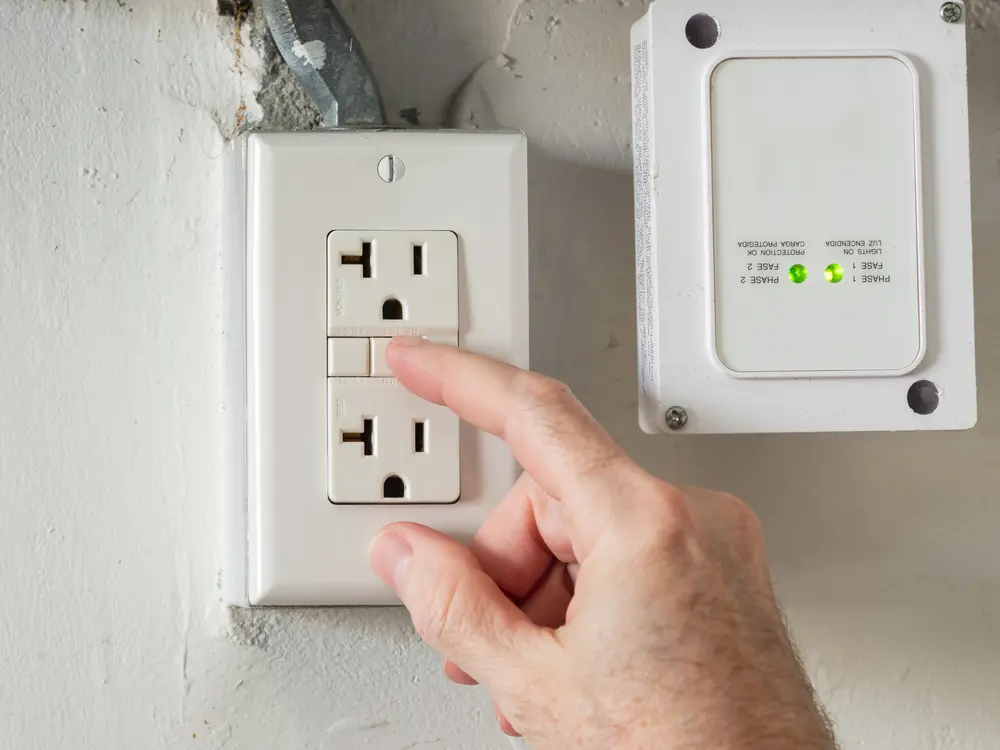
Sacramento homes take utility power as a split-phase 120/240-volt service. The Electrical Safety Foundation International (ESFI) describes a typical service head as two 120-volt wires plus a neutral. A standard wall receptacle uses one hot and the neutral, so you measure about 120 volts. Larger appliances such as dryers, electric ranges, and many water heaters use both hot wires (and often the neutral), so hot-to-hot you measure about 240 volts.
That is intentional design, not a defect. The face of a 240V receptacle looks different for a reason. The plug will not fit a normal duplex, and the breaker is a double-pole device that opens both hots together. People still say “220” for the same family of receptacles. For dryer, range, and EV receptacle types and install planning, use our separate 240 volt outlets explained guide. This page stays on why voltages differ in the first place.
| What you measure | Usual meaning | Typical homeowner cue |
|---|---|---|
| About 120V hot to neutral | Standard branch-circuit receptacle | Normal duplex face; lamps, TVs, chargers |
| About 240V hot to hot | Two-leg appliance receptacle or hardwired load | Larger face / different slot pattern; dryer, range, some EV setups |
| 120V outlets that swing high or low under load | Often a shared-neutral or loose-neutral problem | Lights brighten or dim when another room loads up |
| Hot-to-hot near 0V on two “paired” breakers | Both hots may sit on the same leg | Shared-neutral cable wired wrong in the panel |
If the receptacle is labeled for 240V and the appliance expects 240V, higher voltage is normal. If a regular duplex is reading 150V, 90V, or bouncing while you run a space heater elsewhere, that is not “a higher voltage outlet.” That is a fault path.
What is a multiwire branch circuit and a shared neutral?
A multiwire branch circuit (MWBC) uses two hot conductors that share one neutral. EC&M’s NEC branch-circuit coverage defines a multiwire circuit as two or more ungrounded (hot) conductors with a common neutral, with voltage between the hots and equal voltage from each hot to that neutral. In a Sacramento split-phase panel, the two hots must land on opposite legs so the neutral only carries the difference of the two load currents.
Builders used MWBCs for decades because one cable can feed two 120V circuits with less copper. Mid-century Sacramento kitchens, laundry rooms, and living-dining pairs still have them. Done correctly, an MWBC is a normal wiring method. Done wrong, it is one of the fastest ways to cook a neutral or push odd voltage onto everyday receptacles.
NEC 210.4 (as adopted in the California Electrical Code) requires a way to disconnect both hots at once at the origin of the MWBC. EC&M notes that a two-pole breaker or single-pole breakers with listed handle ties can meet that simultaneous-disconnect rule for line-to-neutral loads. If someone later moves one hot onto a same-leg breaker, or leaves the handle tie off, the shared neutral can carry the sum of both loads instead of the difference.
Homeowner shorthand:
- Shared neutral = two 120V circuits using one white return wire.
- Opposite legs = correct MWBC geometry; hot-to-hot near 240V.
- Same leg = wrong geometry; hot-to-hot near 0V; neutral can overload.
- Missing handle tie = one breaker can stay hot while you think the circuit is off.
Do not open the panel to “check the phases” yourself. Kill power at the correct breakers only after an electrician confirms they are tied or common-trip, or have a licensed tech do the testing.
Why can two regular 120V outlets measure different voltages?
Design voltage is not the only reason meters disagree from room to room. Common field causes we see on service calls:
- Long branch runs and thin conductors create voltage drop under load. A receptacle far from the panel can sag several volts when a heater or vacuum starts. That is still a 120V circuit, just a weak one.
- Loose neutrals at a receptacle, splice, or panel bar raise or lower hot-to-neutral readings as loads change. On an MWBC, an open shared neutral can put two circuits in series across about 240 volts. One side can spike high while the other browns out.
- Backstabbed receptacles and worn contacts add resistance. The face feels warm, plugs sit loose, and a meter at the slots does not match the panel.
- 1960s-1970s aluminum branch wiring (ESFI notes nearly two million U.S. homes used aluminum in that era) needs connectors rated for aluminum. Loose AL connections show up as flickering and odd voltage long before the receptacle face looks wrong.
- A bootleg ground or reverse-hot/neutral swap can fool a cheap three-light tester while a true voltage reading still looks “almost normal” until a metal box or appliance chassis bites.
So two outlets can both be “120V by design” and still disagree by enough volts to kill LED drivers, confuse smart devices, or trip GFCI/AFCI protection. The fix is finding the connection, not buying a higher-rated power strip.
What does a miswired receptacle look like in Sacramento homes?
Miswiring is how a normal duplex starts acting like it has the wrong voltage. Patterns we document on walkthroughs:
- Hot and neutral reversed at the device. Polarized plugs still insert, but the switch-leg logic and some appliances behave oddly.
- Neutral lifted or shared incorrectly between unrelated circuits. Lights brighten when a dryer or microwave starts. That is a classic open-neutral or overloaded shared-neutral symptom.
- Ground tied to neutral at the receptacle (bootleg ground) to “pass” a three-light tester after a remodel. The tester smiles; the shock path is still wrong.
- MWBC neutrals spliced in a way that leaves one hot energized after only one single-pole breaker is shut off. That is why the simultaneous-disconnect rule exists.
- Someone converted a multiwire cable into a half-finished 240V attempt without changing the breaker, cable, or receptacle face. The wall now has a dangerous hybrid.
Older East Sacramento, Land Park, Curtis Park, Carmichael, and Fair Oaks stock often mixes original mid-century cable with later DIY kitchen upgrades. The faceplate can be brand new while the splice above the box is original. If a plug-in tester and a multimeter disagree, believe the meter and stop using the circuit until it is checked.
For receptacle replacement, GFCI upgrades, and related device work after diagnosis, see our Sacramento electrical outlet and switches service page. That is the money page behind this guide.
When is odd voltage normal design versus a wiring fault?
Use this fork before you assume the house is “wired for higher voltage” in every room.
| Situation | Usually normal? | Next step |
|---|---|---|
| Labeled 240V dryer/range/EV receptacle reads ~240V hot-to-hot | Yes | Match NEMA type to the appliance; see the 240V explainer |
| Standard duplex reads ~115-125V with light load | Yes | No action if devices run cool and stable |
| Duplex swings above ~130V or below ~110V when another circuit loads | No | Stop heavy use; schedule diagnosis for neutral/MWBC |
| Lights brighten or dim when laundry or kitchen loads start | No | Treat as possible open or overloaded shared neutral |
| Warm faceplate, buzzing, burning smell, scorch marks | No | De-energize if safe; call a licensed electrician |
| Three-light tester OK but metal box tingles | No | Suspect bootleg ground or open equipment ground |
Normal utility voltage also varies a little through the day. A few volts of movement on a healthy circuit is not the same as a room that climbs toward 150V when the dishwasher starts. If electronics fail in pairs on opposite sides of a shared cable, think MWBC neutral first.
Do you need a City or County permit to fix outlet voltage problems?
It depends on the scope, not on how scary the meter reading feels.
City of Sacramento. Inside city limits, Community Development Permit Services handles electrical permits. The City’s Minor Permits track for residential electrical work includes new electrical circuits, rewire work, and panel work on a field-inspection path for many residential scopes. A same-box device swap can be a narrower conversation than pulling new cable or correcting an MWBC in the panel.
Unincorporated Sacramento County. Addresses outside city limits use the County Building Permits and Inspection Division (Accela Citizen Access), not the City portal. Do not assume a City login covers Carmichael, Fair Oaks, Arden-Arcade, or other unincorporated addresses.
Incorporated suburbs. Elk Grove, Roseville, Citrus Heights, Rancho Cordova, Folsom, and neighbors run their own building departments. Same statewide California Electrical Code base, different counters.
Like-for-like receptacle swaps sometimes sit in a different lane than circuit corrections. For that narrower California question, see our replace outlet without permit guide. Correcting a shared neutral, moving breakers onto opposite legs, or adding a new branch leaves the simple swap lane. When diagnosis points to damaged cable or a full circuit rebuild, our circuit replacement and installation page is the related service path.
What should you do before calling an electrician about outlet voltage?
Gather facts. Do not start pulling receptacles on a shared-neutral circuit with only one breaker off.
- Write down which rooms dim or brighten together.
- Note whether the odd reading is on a normal duplex or on a large appliance receptacle.
- Unplug sensitive electronics on the swinging circuits.
- Check whether two single-pole breakers feed the rooms that act linked. Do not remove handle ties.
- Photograph the panel directory and any scorch marks on devices (power off if you smell burning).
- Verify the contractor on CSLB (ours is #1099728).
On the visit, ask the tech to confirm opposite-leg landing on any MWBC, torque on neutrals, and whether AFCI/GFCI devices are masking a deeper splice problem. For intermittent trips and mystery voltage, our electrical troubleshooting and repair page covers how we scope diagnosis calls.
Bottom Line
Higher voltage at some receptacles is often correct 240V design for heavy appliances. Weird voltage on everyday 120V outlets is a different problem: shared neutrals, open neutrals, same-leg multiwire mistakes, voltage drop, or miswired devices. Sacramento mid-century housing still carries plenty of MWBC cable, so linked rooms and swinging readings deserve a licensed check, not another internet adapter.
If your meter shows a true 240V appliance receptacle, plan the NEMA match on the 240V guide. If a duplex is swinging, smelling hot, or tied to lights that surge when the laundry starts, stop loading that circuit and get the neutral path verified.
Need a walkthrough on odd outlet voltage in Sacramento? Call Old Town Electric at (916) 307-0990 (Mon-Fri 8-6) or use our contact page. Ask for a free estimate and note which rooms change brightness together.
Sources
Electrical Safety Foundation International (ESFI) – Understanding Your Home Electrical System (service head as two 120-volt wires plus neutral; 120V vs 240V appliance circuits; aluminum branch wiring era notes).
EC&M – NEC Requirements for Branch Circuits (multiwire branch circuit definition; NEC 210.4 simultaneous disconnect and grouping notes).
EC&M – Stumped by the Code? Defining a Multiwire Branch Circuit (equal voltage hot-to-neutral; handle-tie / common-trip disconnect framing).
National Electrical Code 210.4 multiwire branch circuit rules as adopted in the California Electrical Code.
City of Sacramento Community Development – Minor Permits page (residential electrical minor work including new electrical circuits and rewire work).
Sacramento County Building Permits and Inspection Division – Accela Citizen Access / BPI permit path for unincorporated addresses.
Contractors State License Board (CSLB) – C-10 Electrical Contractor license verification for California (#1099728 for Old Town Electric Inc.).